
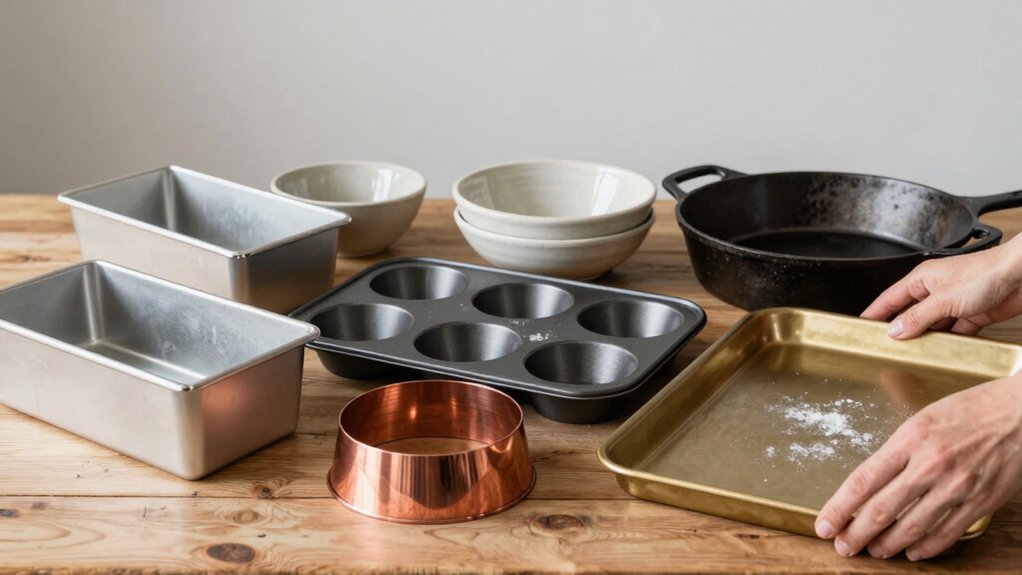
Choose light-colored, heavy-gauge metal pans for even baking and consistent browning. Use 9-inch round pans for cakes and a loaf pan for bread, ensuring true dimensions for accurate results. Avoid dark or thin pans—they over-brown edges. Aluminum offers superior heat transfer; rounded corners improve baking uniformity. For lasting performance, pick durable materials like Nordic Ware or Fat Daddio. Care matters—hand-wash nonstick and dry thoroughly. There’s more to optimize your bakeware choices effectively.
What Are the 8 Essential Baking Pans Every Baker Needs?
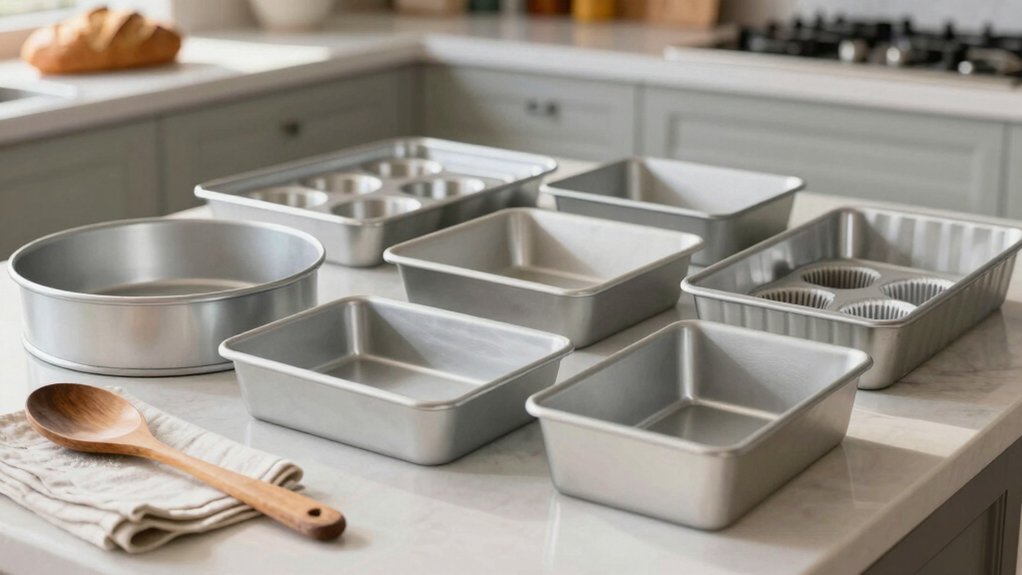
What exactly makes a baking pan essential? It’s about versatility, size accuracy, and performance across recipes. Your essential pans should include an 8×8 or 9×13 cake pan, 9-inch round cake pans, a loaf pan, a standard 12-count muffin pan, mini muffin pan, 9.5-inch pie dish, and a 12×17-inch sheet pan. These bakeware staples cover everything from brownies to casseroles. Opt for bakeware materials like heavy-gauge, light-colored metal for even baking. Avoid thin, dark pans that cause over-browning. While nonstick bakeware offers easy release, it’s not always necessary. Standard pan sizes ensure recipe accuracy and consistency in your baking results.
Does Material Affect Baking Evenness?
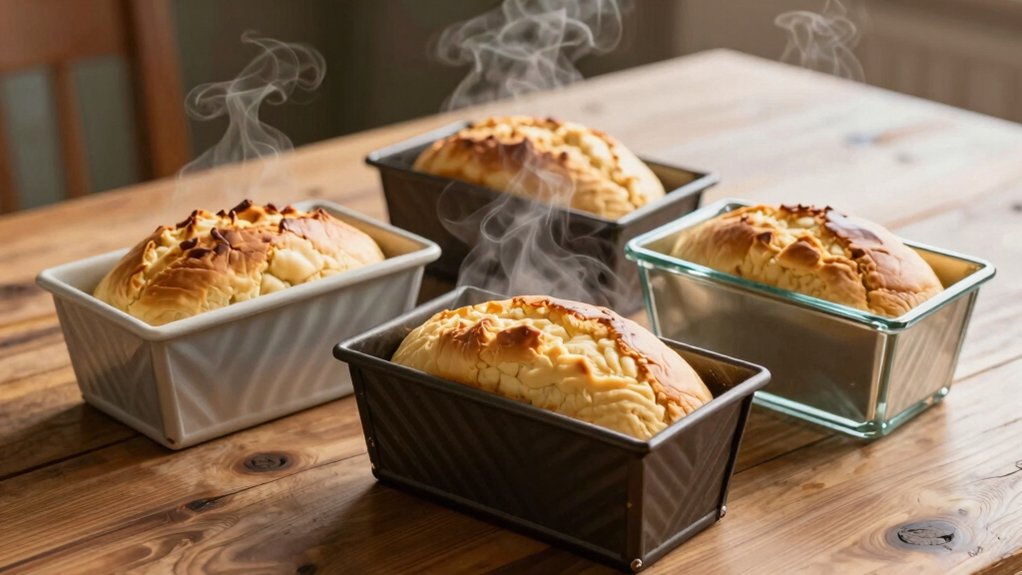
You’ll notice your cakes bake more evenly in light-colored, heavy-gauge metal pans because they transmit heat quickly and uniformly. Darker metal pans absorb more heat, often leading to over-browned edges and underbaked centers—especially in thin models like basic Wilton or Fat Daddio pans. Glass and ceramic, while slower to heat, retain warmth longer, which can overbake edges unless you adjust the temperature or use them for dishes that benefit from steady heat.
Metal Conductivity Matters
Why do some pans bake evenly while others leave you with burnt edges and a gooey center? It comes down to metal diffusivity. Aluminum bakeware offers superior heat transfer, ensuring even baking across sheet pans and loaf tins. Heavy-gauge pans, like those from Nordic Ware or USA Pan, resist warping and distribute heat uniformly. Your bakeware material and color matter—light-colored pans reflect heat, while dark vs light pans show clear differences: darker ones absorb more heat, often over-browning edges. For consistent results, choose light, heavy-gauge aluminum bakeware. Rounded pan corners also help, promoting even baking and easier cleanup compared to sharp 90-degree corners.
Glass Retains Heat
How does your choice of bakeware influence browning and doneness? Glass bakeware retains heat longer, affecting both bread and cakes by promoting deeper browning and extending cooking after removal from the oven. Its heat retention can lead to uneven browning, especially around edges. You’ll often need to adjust bake times and monitor center doneness closely. For oven safety, most tempered glass options, like Pyrex, are rated up to 425°F. Glass heats slowly, so expect a softer bottom crust versus metal.
- Lower thermal conductivity delays initial heating
- Residual heat increases risk of overbaked edges
- Always verify center doneness to prevent undercooking
How Does Pan Color Change Your Bake?
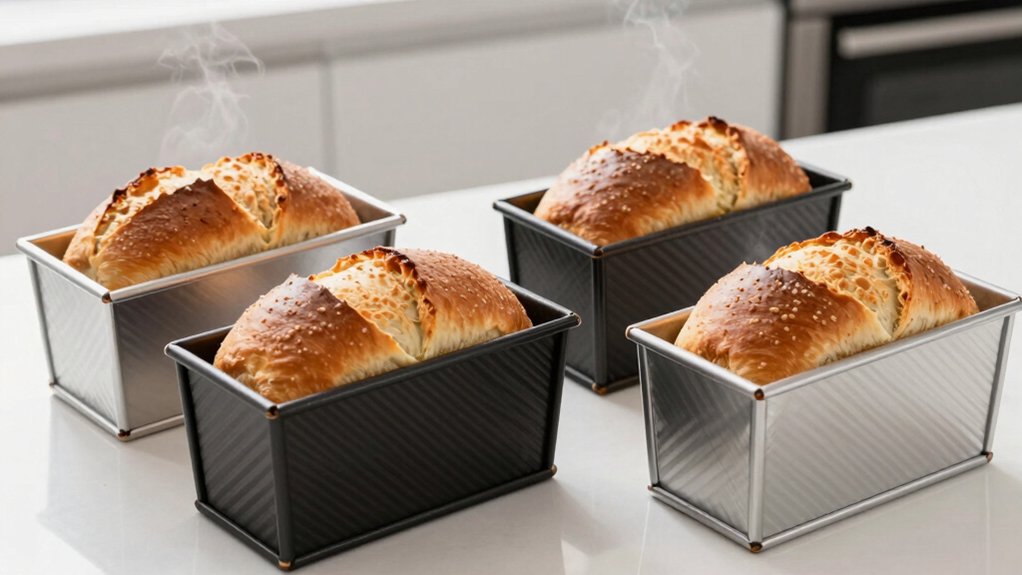
What makes one loaf evenly golden while another burns at the edges? It’s your pan color. Light vs dark pans changes everything. Light-colored metal bakeware reflects heat, promoting even browning and minimizing edge over-browning. Dark pans absorb more heat, increasing heat reflection and creating hot spots that can ruin baking results. The bakeware finish matters—shiny, light finishes yield better control. For even browning and ideal baked goods appearance, choose light vs dark pans carefully. Nordic Ware and Fat Daddio’s light-finish metal bakeware tested best. Dark, thin pans brown faster, risking overbaked edges. Stick to light finishes for consistent, reliable outcomes.
Round, Square, or Sheet Pan: Which Should You Use?
Your choice of pan color sets the foundation for even baking, but the shape of your bakeware plays just as big a role in how your food cooks. For consistent results, match the pan to your recipe’s needs:
- Use round pans (8- or 9-inch) for layered cakes—ideal for even baking and predictable bake time.
- Choose square pans (8×8 or 9×9 inches) for brownies or bars, but verify the true size to prevent browning edges.
- Opt for sheet pans (12×17 inches) with light-colored metal for cookies or sheet cakes—ensuring even baking and minimal hot spots.
Always consider pan size, shape accuracy, and material to avoid uneven results.
How Do Size and Depth Impact Baking Results?
Why does your cake sometimes rise unevenly or your brownies overbake at the edges? Your pan size and depth play a big role. An 8×8 pan’s actual size can vary, affecting heat distribution and bake time. Shallow pans speed up baking, while deeper, 2-inch pans prevent overflow and support even rising.
Square/rectangular pans in light-gauge metal heat evenly, but dark pan gauge can cause edge browning. Heavier bakeware material improves heat retention, reducing uneven baking. Glass pans retain heat longer, which may require shorter bake times. Always match pan size and depth to your recipe to balance center doneness and edge browning.
Glass, Metal, or Nonstick: Which Bakeware Lasts Longer?
How long your bakeware lasts depends not just on how often you use it, but on the material itself. Heavy-gauge metal pans offer the best durability and even heat, resisting wear and tear over time. Glass bakeware provides consistent heat retention but has a longer heat-up time and risks breakage from temperature shocks. Nonstick coatings make release easy but degrade with use, requiring replacement when scratched. For bakeware longevity, consider these factors:
- Metal pans resist warping and deliver reliable performance.
- Glass bakeware retains heat well but is prone to cracks.
- Nonstick coatings reduce sticking but wear out faster.
How to Clean and Store Baking Pans Properly
What separates well-maintained bakeware from worn-out pans often comes down to cleaning and storage habits. You should always use hand-washing for non-stick pans and aluminum pans with a soft sponge to ensure coating care and avoid scratches. Soak stuck-on food in hot soapy water for 5 minutes before cleaning. Always dry thoroughly to prevent moisture damage. For storage with separators like cloth liners or stack them in a rack to prevent warping and scratches. Inspect your pans regularly—pan inspection helps you catch warping or coating wear early. Proper care extends usability and performance, keeping your bakeware in top condition for consistent baking results.
Conclusion
You now know the essentials: choose bakeware based on material, color, shape, size, and durability. Light metal pans heat evenly, while dark pans may over-brown edges. Glass retains heat longer, ideal for custards. Use 8×8-inch pans for small batches, 9×13-inch for larger ones. Round pans work best for layer cakes; sheet pans suit cookies. Proper cleaning and storage extend pan life. Selecting the right bakeware improves results.
