
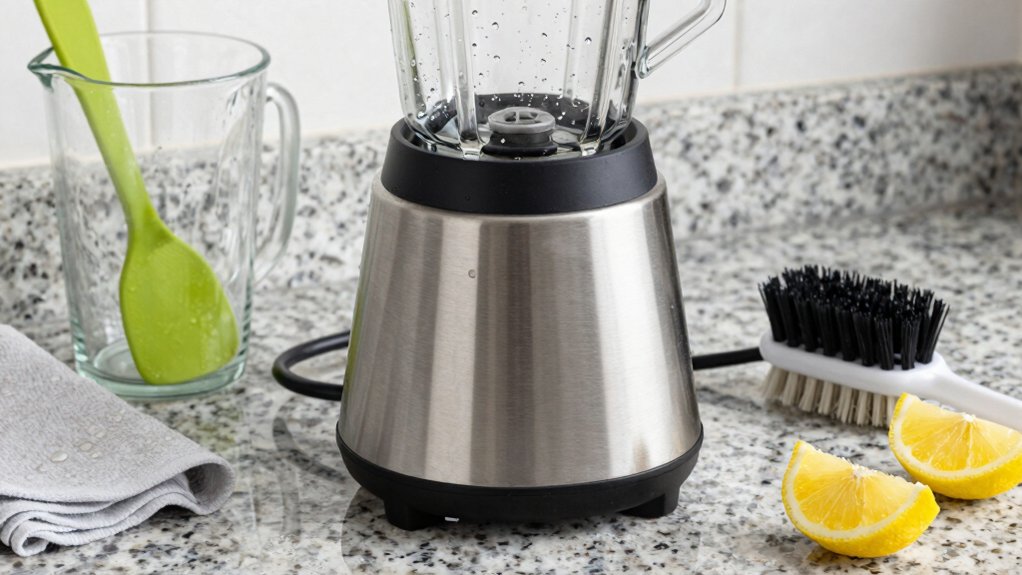
Clean your blender right after each use by rinsing the jar, lid, and blade assembly. Add warm water and a few drops of soap, then blend for 30 seconds. Deep clean weekly—soak parts in warm, soapy water for 10–15 minutes and scrub seals with a soft brush. Occasionally use vinegar to remove buildup. Store all pieces completely dry, leave the jar off the base, and coil the cord loosely. For battery models, charge to 50–60% before storing. You’ll find even more helpful tips that keep your blender running like new.
Clean Your Blender Right After Every Use
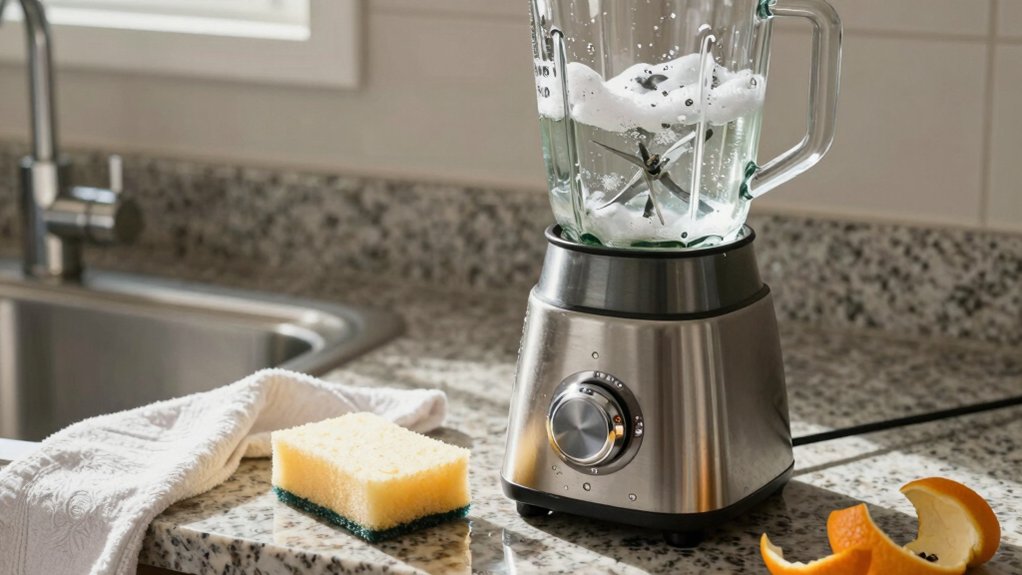
Why wait for dried-on messes to complicate cleaning? Rinse the blender jar, lid, and blade assembly right after use to prevent residue buildup. For effective blender cleaning, add warm water and a few drops of dish soap to the jar. Blend on low for 30 seconds to loosen stuck particles. Disassemble the blade assembly and wash all removable parts thoroughly. Never submerge the motor base—wipe it with a damp cloth and dry immediately. Air-dry all components completely before reassembly. Storing wet parts invites mold and rust. Immediate cleaning prevents hardened stains, maintains performance, and extends lifespan. You’ll save time and avoid scrubbing later.
Deep Clean Your Blender Weekly
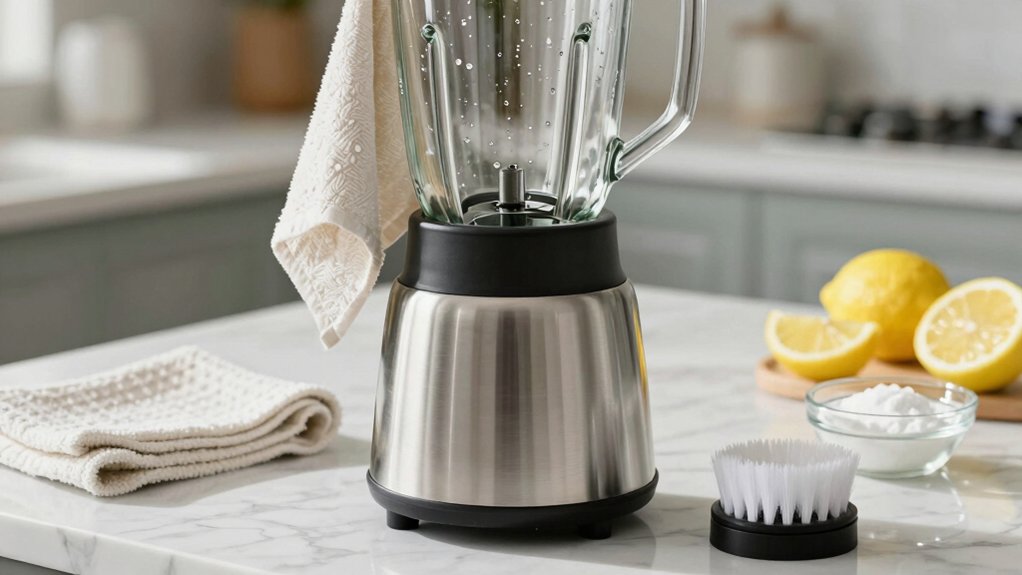
How often do you give your blender a thorough cleaning beyond the quick rinse? For effective blender maintenance, commit to a deep clean weekly. Start by disassembling the removable parts, including the blade assembly and gaskets, and use soaking in warm, soapy water for 10–15 minutes to loosen grime. Scrub the base and seals with a soft brush. Occasionally, use a tablespoon of white vinegar in warm water for 15–20 minutes to dissolve mineral deposits. Rinse well and air-dry completely. Finish with a performance check: blend warm water and a drop of detergent at low speed to confirm cleanliness and function.
Store Your Blender for Long Life
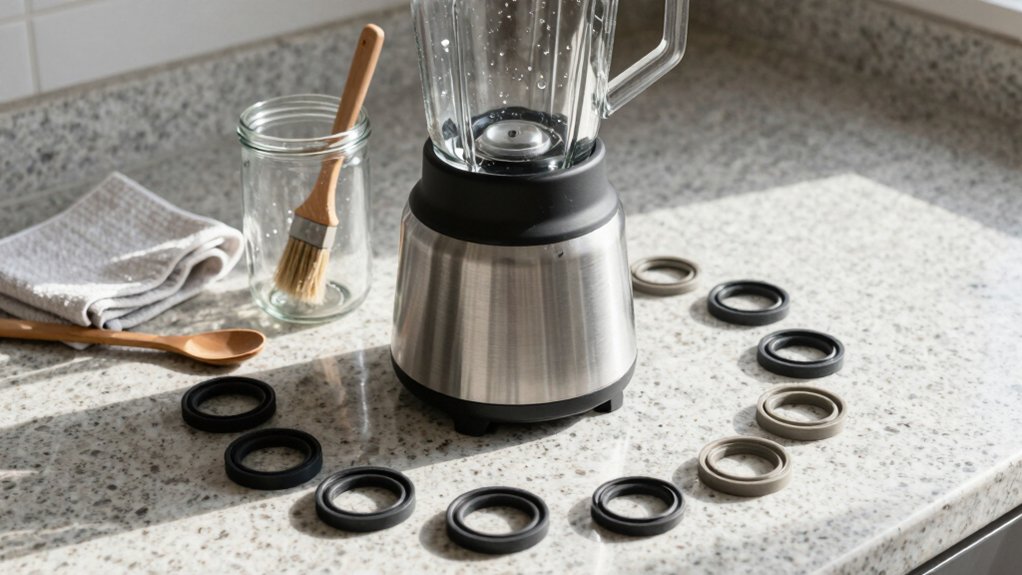
Where should you keep your blender when it’s not in use? Proper blender storage is key to long-term maintenance. Always choose a dry storage spot to prevent moisture damage. After cleaning, leave the jar off the base and the lid unsealed to air out odors. For cord care, avoid tight wraps—loosely coil the cord to prevent fraying. If you have a BLENDi with a battery, practice battery-friendly storage: charge to 50–60% and store in a cool, dry area.
Store your blender in a dry spot, keep parts separated to air out, loosely coil the cord, and for battery models, charge to 50–60% before storing in a cool, dry place.
- Store all parts completely dry
- Keep in a clean, dry storage location
- Prevent odors by leaving jar uncovered
- Practice proper cord care to extend life
Blend Smart to Save Your Motor
Now that your blender is properly stored and ready for its next use, it’s equally important to think about how you operate it. Smart blending habits protect the motor and ensure long-term maintenance. Avoid overloading the blender—stick to recommended capacity limits. Always include enough liquid to reduce motor strain. Let the motor cool every 30 seconds during long blending sessions. Run a gentle cleaning cycle with warm water and soap to preserve seals. Watch for signs of wear like grinding noises or sluggish performance.
| Issue | Prevention | Benefit |
|---|---|---|
| Overloading | Stay under max fill line | Protects motor |
| Poor cleaning | Rinse immediately | Prevents residue buildup |
| Ignoring signs of wear | Check motor performance monthly | Extends blender life |
Conclusion
Clean your blender right after each use to prevent stuck-on food and odors. Do a deep clean weekly with warm, soapy water and a drop of dish soap, blending for 30 seconds. Always wipe the base and check the gasket for debris. Store with the pitcher off the base to prevent seal damage. Blend in small batches—no more than 4 cups at a time—to avoid overheating the motor.
