
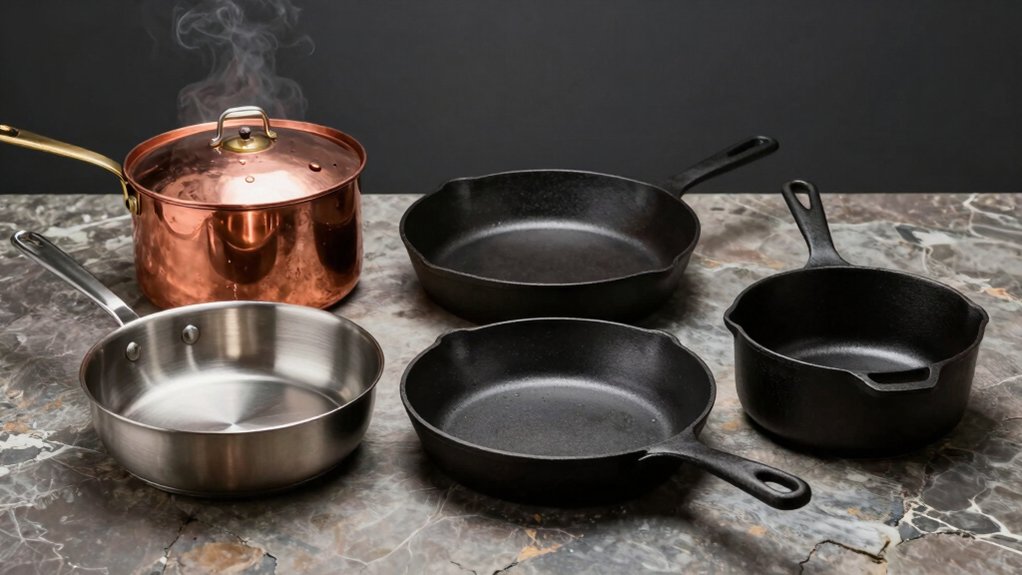
You’ll find stainless steel durable and non-reactive, ideal for searing with even heat when clad with aluminum or copper. Cast iron retains high heat perfectly, great for crusty searing and lasting generations with care. Non-stick pans make cooking eggs easy and cleanup fast, especially with PFOA-free coatings. Copper responds quickly to temperature changes, offering precision for delicate tasks. Anodized aluminum heats fast, stays budget-friendly, and resists reactivity. Each material suits specific cooking needs—discover how they compare in real kitchen use.
Stainless Steel: Best for Searing and Everyday Durability
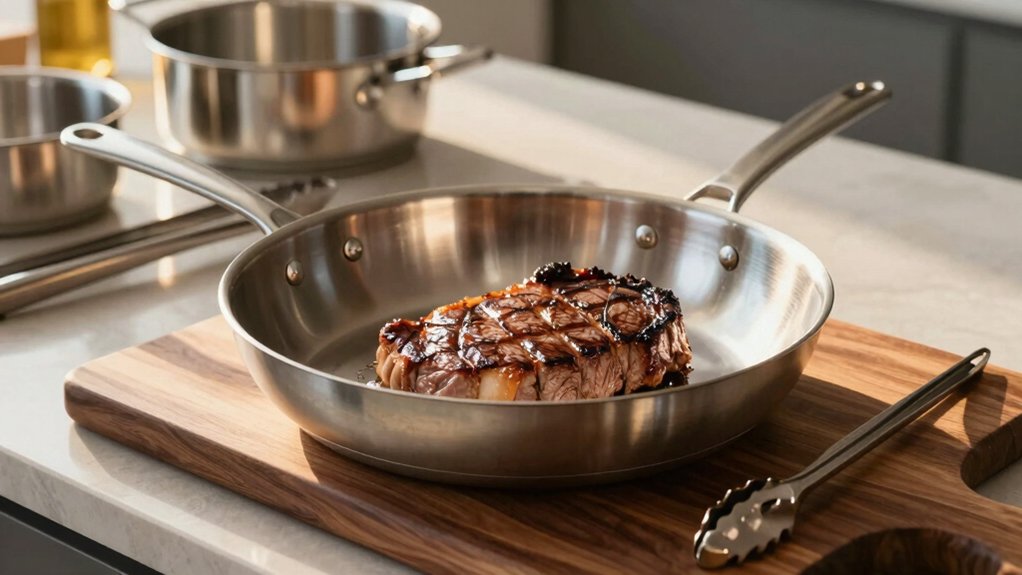
When it comes to reliable, high-performance cookware, stainless steel stands out for its resilience and versatility in everyday cooking. You’ll appreciate its durability—resistant to rust, warping, and scratches. Thanks to multi-layer cladding with aluminum or copper cores, stainless steel offers excellent heat distribution for consistent searing. The non-reactive surface won’t alter flavors, making it ideal for acidic ingredients. Proper preheating with a little oil prevents sticking. Its cladding enhances thermal conductivity, maintaining steady temps for effective deglazing. Among cookware materials, stainless steel balances performance and ease of use. Oven, broiler, and dishwasher safe, it’s built to last.
Cast Iron: Top Choice for Even, High-Heat Cooking
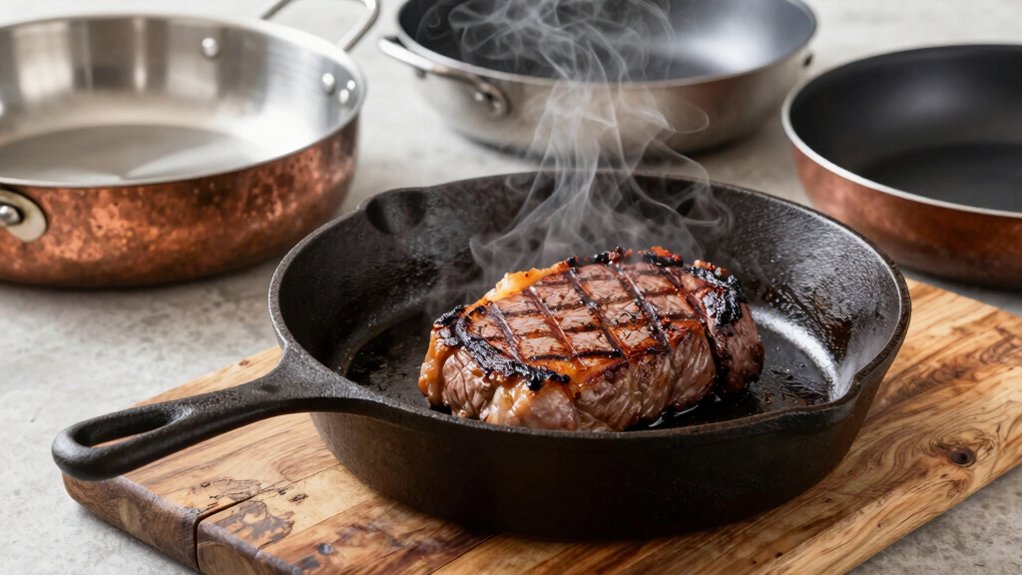
Cast iron excels in delivering consistent, high-heat performance that’s hard to beat in the kitchen. You’ll love its superior heat retention and even cooking, ideal for high-heat searing and crusty results. With proper preheating, your cast iron cookware distributes heat evenly across the surface.
Cast iron delivers unmatched heat retention and even cooking, perfect for searing and achieving crispy, flavorful results every time.
Maintain it well to enjoy long-term benefits:
- Regular seasoning builds a natural non-stick surface and supports rust prevention
- Exceptional durability means it can last generations with proper care
- Retains heat efficiently, keeping food cooking steadily after removal from burner
- Requires thorough drying and occasional oiling to avoid corrosion
Despite its weight, it’s a trusted choice for serious cooking.
Non-Stick Pans: Ideal for Eggs and Easy Cleanup
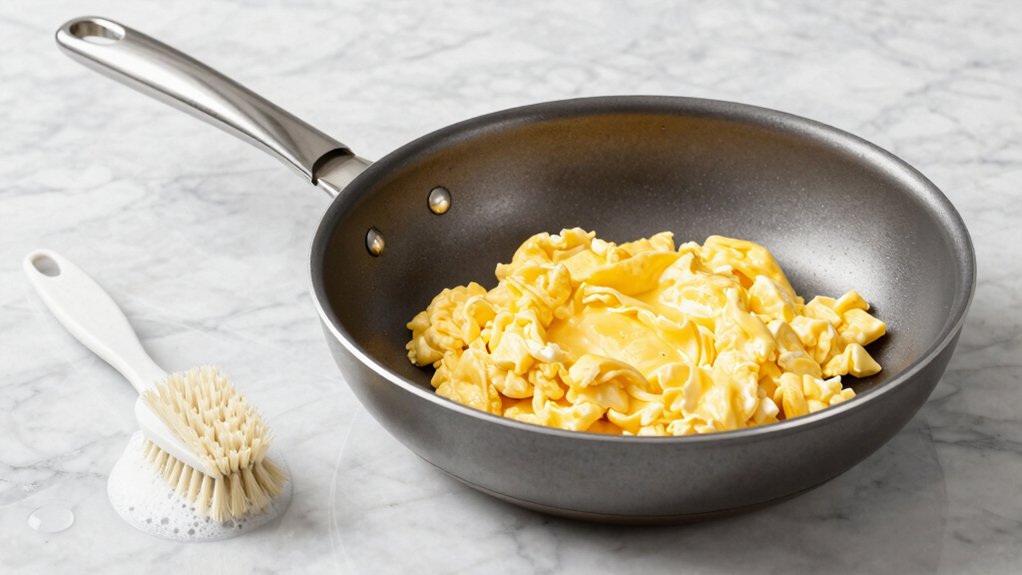
Why do eggs glide off the pan without a trace? Because non-stick coatings like PTFE or ceramic coating are designed to prevent food from sticking. These pans make cooking delicate foods—especially eggs—easier and require less oil. They’re ideal for low to medium heat, as high temperatures can damage the surface. While cleanup is a breeze, coating wear over time is a concern. Avoid metal utensils to extend their life. Some non-stick pans contain PFAS or PFOA, but newer options are PFOA-free and PFAS-free for safer use. Choose carefully to balance easy cleanup with durability and health considerations.
Copper: Most Responsive for Precise Cooking
How do professional chefs achieve such precise control over their sauces and seared meats? Copper cookware delivers unmatched responsiveness and thermal conductivity. You’ll notice how quickly it adjusts to heat changes, thanks to its high thermal conductivity and rapid heat up time. This gives you superior heat control for delicate tasks. However, copper requires a lining—like tin or stainless steel—because it’s reactive. Most copper pans also lack induction compatibility unless they’ve a magnetic base. For peak cookware performance, look for heavy-gauge (1/16 to 1/8 inch) construction.
- Exceptional thermal conductivity
- Immediate responsiveness to heat adjustments
- Lining (tin or stainless steel) prevents reactivity
- Limited induction compatibility without magnetic base
Aluminum: Budget-Friendly and Fast, But Reactive
One of the most widely used materials in modern cookware, aluminum delivers fast heating and even heat distribution at a fraction of the cost of other metals. You’ll love its lightweight, budget-friendly design and excellent heat conductivity. But pure aluminum is reactive, especially with acidic foods, which can affect flavor and cookware surfaces. That’s why you often see nonstick aluminum or anodized aluminum—both reduce reactivity and boost corrosion resistance. Clad cookware with aluminum cores combines the best of both worlds: responsiveness and durability.
| Feature | Benefit |
|---|---|
| Heat conductivity | Fast, even cooking |
| Lightweight | Easy handling |
| Anodized aluminum | Improved durability, less reactivity |
| Clad cookware | Enhanced performance, better cookware surfaces |
Conclusion
You now know the top five cookware materials and their strengths. Stainless steel withstands daily use and high-heat searing. Cast iron retains heat evenly, ideal for frying or baking. Non-stick coatings prevent food from sticking, perfect for eggs. Copper responds quickly to temperature changes. Aluminum heats fast but reacts with acidic foods. Each material suits specific cooking methods, helping you choose wisely based on performance, durability, and maintenance needs.
