
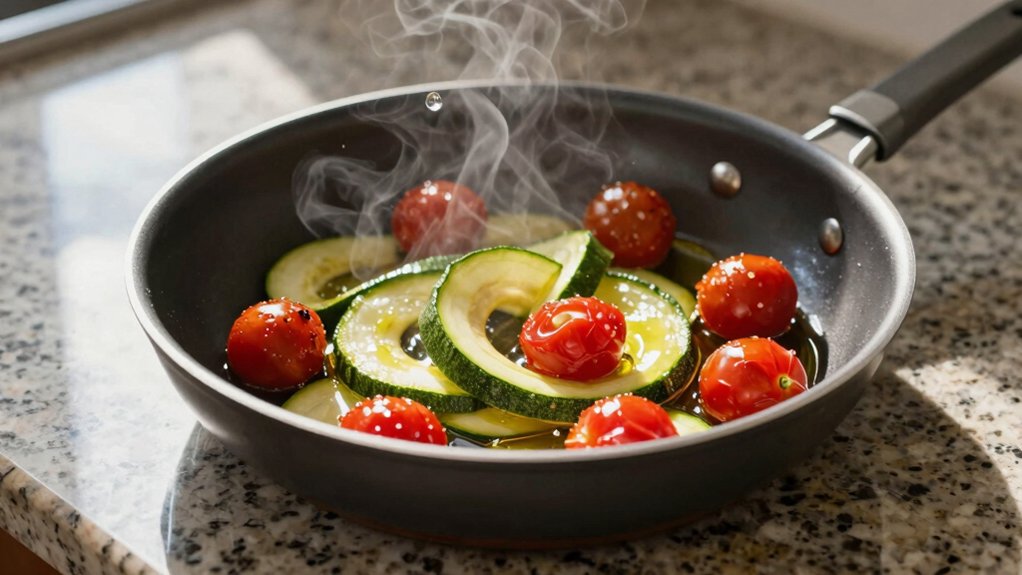
You can cook healthier with nonstick cookware by using less oil—cutting fat intake without sticking or losing flavor. Modern ceramic coatings like Thermolon or Caraway are PFAS- and PFOA-free, avoiding toxic fumes at high heat. These pans perform best at low-to-medium temperatures, preserving the coating and your health. Proper care—no metal utensils, handwashing, no empty preheating—extends their safe use. Choosing verified PFAS-free options ensures long-term safety and performance, especially when you know what to look for in materials and certifications.
What Makes Nonstick Cookware a Health Risk?
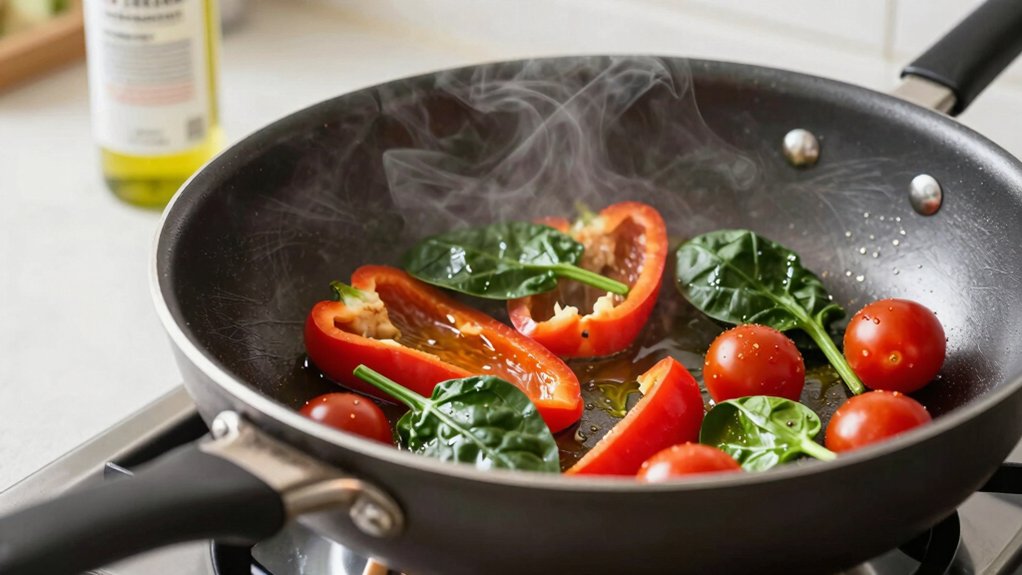
How safe is your nonstick pan when heated? If you’re overheating it, you could be releasing PTFE fumes, which are harmful when inhaled. While modern nonstick coatings are PFOA-free, they still contain PTFE—a PFAS chemical that breaks down at high temperatures. This releases toxic chemicals linked to polymer fume fever, causing flu-like symptoms in people and posing serious risks to birds.
Overheating beyond safety guidelines degrades the nonstick coating, increasing exposure risks. To stay safe, always use low-to-medium heat. Consider safer cookware materials like cast iron or stainless steel if you regularly cook at high temperatures.
Are PFAS-Free Pans Really Safe?
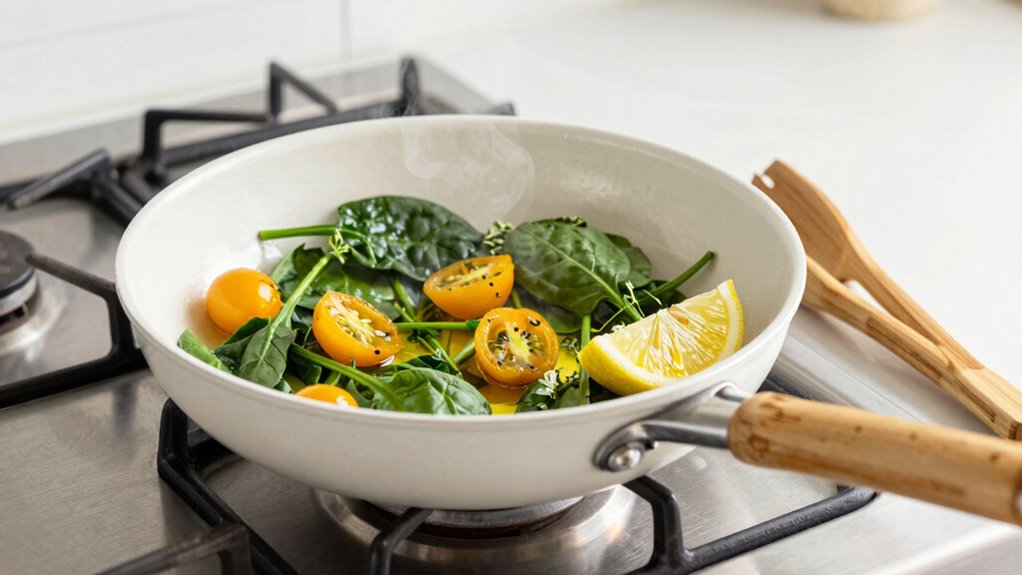
What truly sets PFAS-free pans apart in today’s market? They avoid the entire PFAS family, including PFOA, PFOS, and GenX, eliminating risks tied to toxic breakdowns in traditional nonstick coatings like PTFE. Ceramic-coated pans, a popular PFAS-free option, use sol-gel or mineral-based layers derived from sand, offering safer nonstick performance. Since PFOA was phased out by 2016, “PFOA-free” claims are less meaningful—focus instead on verified PFAS-free cookware. For safety verification, look for third-party seals like Organic Authority Approved Clean Cookware. These labels confirm no PFAS is used, supporting healthier cooking. Trusted materials include pure ceramic, stainless steel, and enamel-coated cast iron.
How Nonstick Pans Reduce Oil Without Sacrificing Safety
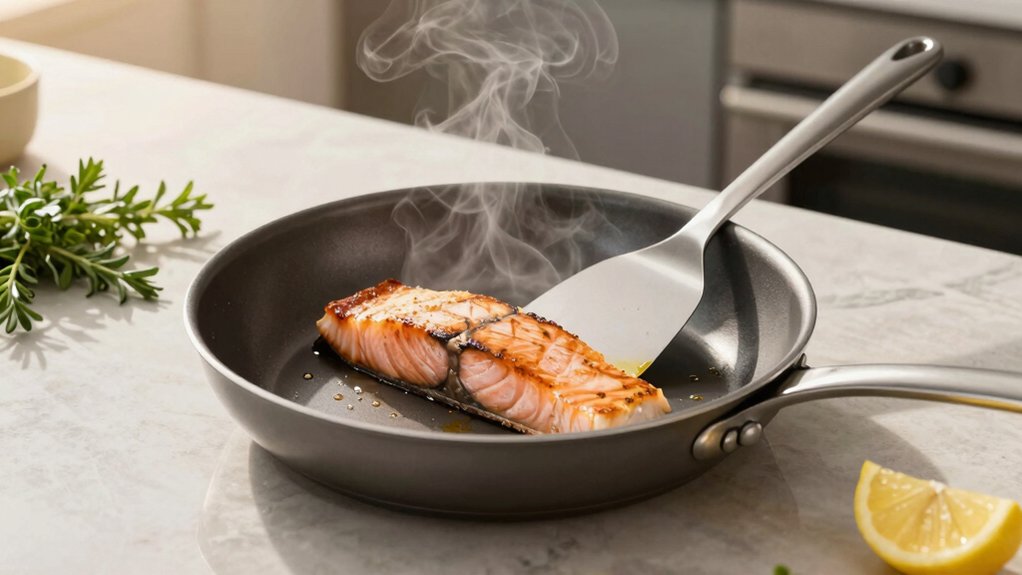
You can cook with little to no oil thanks to nonstick pans’ slick surfaces, which prevent food from sticking and make flipping and cleaning easier.
Modern ceramic-coated options like Thermolon or Caraway are PFAS- and PFOA-free, so you get a safer surface without sacrificing performance.
Low Oil Cooking
Why do so many health-conscious cooks turn to nonstick pans when cutting back on fat? Because the nonstick coating enables low oil cooking without sacrificing food release or easy cleanup. You use less cooking oil—sometimes none—reducing calories and supporting healthy cooking. Ceramic nonstick options are PFAS-free and PTFE-free, ideal for those prioritizing safety and simplicity. A small amount of oil still helps preserve the coating and improves browning.
With proper nonstick cookware care—like avoiding metal utensils and high heat—you maintain performance. This cooking oil reduction makes nonstick cookware a smart, lasting choice for everyday low oil cooking.
Safe Nonstick Surfaces
Nonstick pans allow you to cook with less oil while maintaining easy food release, making them a practical choice for healthy, low-fat meals. Today’s nonstick surfaces prioritize safety without sacrificing performance. You can choose safer cookware materials like ceramic coating, which is PFAS-free and PFOA-free, or trust modern PTFE-coated safety when used at low-to-medium heat. Brands such as GreenPan and Caraway offer durable nonstick options through ceramic nonstick brands, supporting health-conscious cooking.
- Modern PTFE pans are safe below 730°F
- Ceramic coatings contain no PFAS, GenX, or PFOS
- Proper care extends nonstick surface life
Healthier Food Preparation
How can a simple change in cookware lead to noticeably lower fat intake without compromising meal quality? Using nonstick cookware enhances oil reduction, enabling low-fat cooking without sacrificing food release. Unlike cast iron or carbon steel, which require regular seasoning and more oil, modern nonstick pans with PFAS-free ceramic coating offer effective performance with minimal fat. These pans provide even heat distribution, reducing hot spots that cause sticking. When used within recommended temperature limits, they maintain safety and durability. Hand washing and avoiding metal utensils preserve the surface, ensuring long-term, healthier cooking results. You’ll enjoy tasty meals with up to 50% less added fat.
Which Materials Are Truly Non-Toxic?
What makes a cookware material truly safe for daily use? You want non-toxic cookware that won’t leach harmful substances into your food. Stick to materials like stainless steel, cast iron, pure ceramic, and carbon steel—they’re durable and inert. Most are naturally PFAS-free, PTFE-free, and PFOA-free. Modern ceramic coating options offer nonstick performance without synthetic chemicals, making them safer than traditional nonstick coatings. Always check labels to confirm they’re PFAS-free and PTFE-free.
- Stainless steel – inert, doesn’t react with food
- Cast iron & carbon steel – develop natural nonstick surfaces when seasoned
- Pure ceramic & ceramic coating – 100% PFAS-free, non-toxic alternative
Why Cooking at Lower Heat Protects Your Health
When you choose materials like stainless steel, cast iron, or ceramic-coated pans, you’re already minimizing exposure to harmful chemicals—but how you use your cookware matters just as much. Cooking at low to medium heat preserves your nonstick coating and ensure heat safety, especially with ceramic nonstick or PTFE PFAS free options. Keeping temperatures moderate prevents the safe release of toxins linked to polymer fume fever, which can occur when coatings overheat. Proper oil lubrication reduces sticking without high heat, enhancing food release.
Ceramic coatings thrive under these conditions, extending coating lifespan beyond the typical 1–5 years. Staying within recommended heat ranges protects both your health and pan performance.
Do Easy-Clean Pans Hide Toxic Risks?
While many assume that easy-clean nonstick pans are inherently safe, some rely on PTFE or Teflon-based coatings that can release toxic fumes if overheated above 500°F or scratched during use. You can reduce risks by choosing PTFE-free or ceramic-coated pans free of PFAS. These alternatives offer better cleaning safety and minimize coating degradation. Still, maintenance matters—avoid abrasive tools and skip the dishwasher, even if labeled dishwasher safe.
- PTFE breaks down at high heat, releasing toxic fumes
- Ceramic-coated pans are PFAS-free but require careful maintenance
- Dishwasher use accelerates coating degradation, shortening pan life
How to Choose a Nonstick Pan That Lasts and Stays Safe
How do you ensure your nonstick pan stays safe and performs well for years? Choose a ceramic-coated pan that’s PFAS-free and PTFE-free for better coating safety. These options avoid toxic chemicals like PFOA and are often lead- and cadmium-free. Prioritize cookware materials with strong heat distribution, such as tri-ply stainless steel or cast iron, to boost nonstick durability. Follow manufacturer guidelines: never preheat empty, use silicone or wooden utensils, and practice proper care. This prevents scratches and extends replacement lifespan.
With moderate use, a ceramic-coated pan typically lasts 2–4 years. Replace it when performance declines to maintain safety and efficiency in your healthy cooking routine.
Conclusion
You now know that nonstick cookware supports healthy cooking by reducing the need for added oils—cutting calorie intake by up to 25% per meal. Modern PFAS-free options, like ceramic and hard-anodized aluminum, offer safer alternatives without sacrificing performance. Using low to medium heat prevents toxic fume release, while proper care extends pan life. Choosing durable, non-toxic materials ensures long-term safety and better cooking results.
