
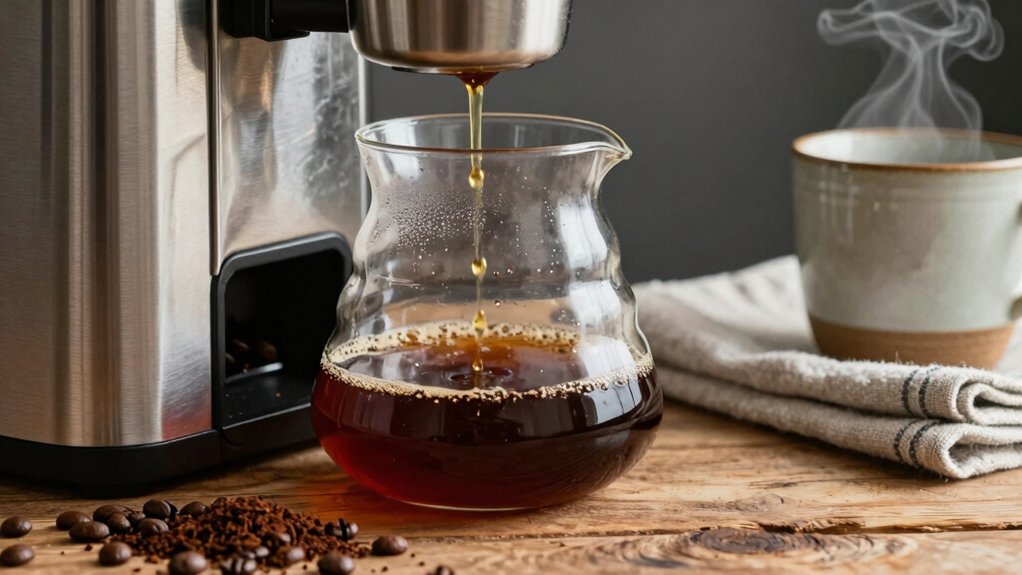
Use 15 grams of freshly ground coffee per 250 ml of water (a 1:16 ratio) for balanced flavor, adjusting to 1:15 or 1:18 to suit your taste. Grind beans to a medium-coarse consistency—like sea salt or granulated sugar, depending on your filter type. Always use filtered water and the correct-sized paper filter. Choose whole beans roasted within the past two weeks, grind just before brewing, and store leftovers airtight. Serve immediately or transfer to a thermal carafe to preserve quality—your setup matters more than you think.
Use the Right Coffee-to-Water Ratio for Balanced Brew
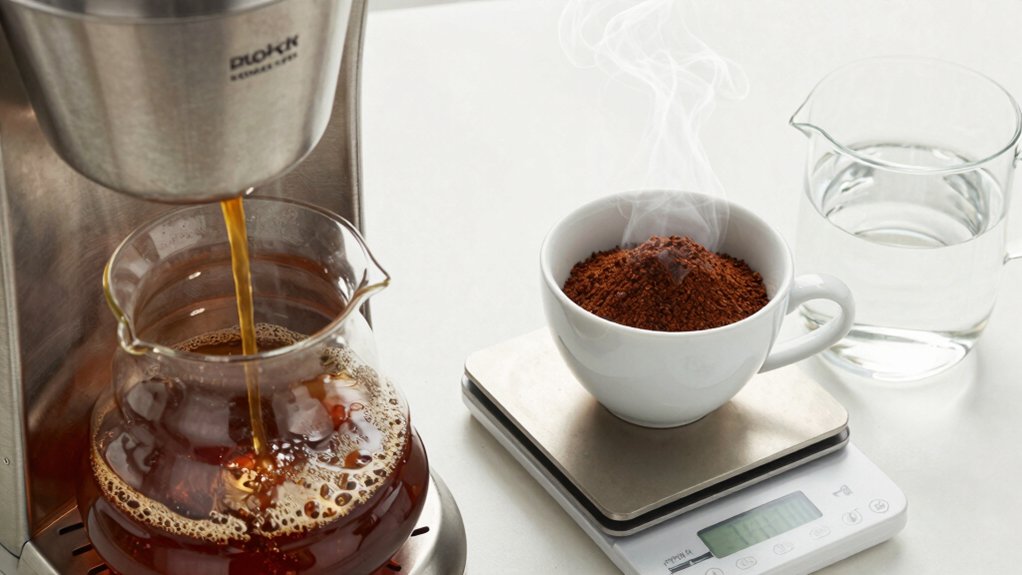
Want to know why your coffee tastes off? It’s likely your coffee-to-water ratio. For balanced brew strength with a drip coffee maker, start with a 1:16 ratio—about 15 g of coffee per 250 ml of water. That’s roughly 2 tablespoons (10 g) per 6-ounce cup. Adjust between 1:15 for stronger or 1:18 for weaker brews, depending on taste. Don’t guess—use precise grind measurements by weight for consistent brewing. Most drip makers define a “cup” as 5–6 oz (118–180 ml), so scale your coffee accordingly. Accurate measurements ensure repeatable, balanced results every time.
Grind Your Beans for Your Drip Coffee Maker
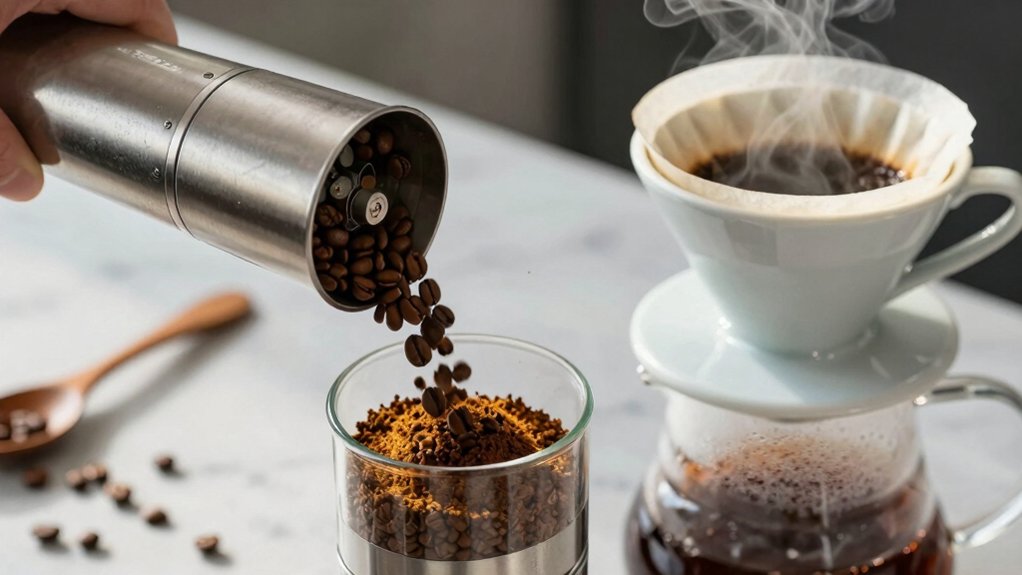
Now that you’ve nailed the coffee-to-water ratio, it’s time to focus on the grind—your next step toward a better cup. Use a medium-coarse grind for most drip coffee makers to ensure even extraction. Your grind size should resemble sea salt for flat-bottom filters and granulated sugar for cone filters, matching your filter type. Grind consistency is crucial—uniform particles prevent under- or over-extraction. Always use freshly ground coffee, as pre-ground beans lose flavor quickly. Grinding just before brewing preserves oils and aroma. Avoid too fine a grind, which can clog filters, or too coarse, which yields weak coffee.
Brew Clean: Use Filtered Water and the Right Filter
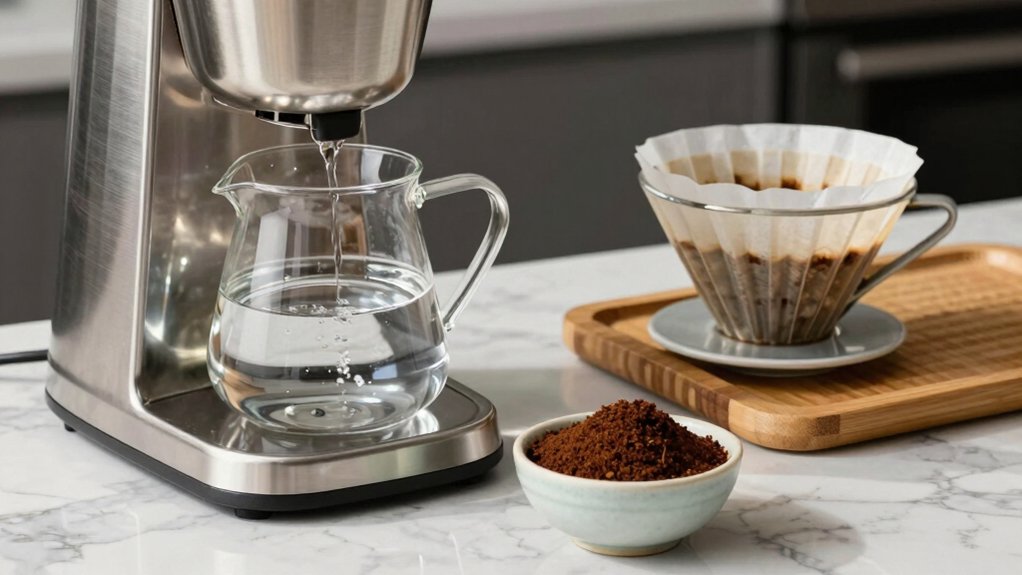
Why does your coffee sometimes taste flat or off, even when you follow the same routine? Your water and filter might be the culprits. Always use fresh, filtered water to reduce impurities and improve coffee clarity. For your drip coffee maker, choose the correct filter size and insert it properly. This ensures even extraction and prevents leaks. Match your water-to-coffee ratio (1:15 to 1:18) for balanced flavor.
| Factor | Tip |
|---|---|
| Water | Use filtered, not tap |
| Filter | Match size to your machine |
| Ratio | 1:15 to 1:18 (coffee:water) |
| Carafe | Pre-heat to maintain temperature |
Choose Fresh Beans for Better Flavor
Freshly roasted beans are the foundation of a flavorful cup, just as clean water and the right filter set the stage for consistent extraction. Use fresh beans roasted within the past two weeks to maximize flavor impact and roast freshness. Always choose whole beans over pre-ground—they retain essential oils and preserve coffee aroma longer. Once ground, flavor deteriorates rapidly, so grind just before brewing. Buy from specialty roasters for better flavor profiles and higher quality control. Store your beans in airtight storage, away from sunlight, heat, and moisture. This simple step maintains freshness and ensures every pot tastes as intended.
Keep Coffee Fresh After Brewing
How long can your coffee stay hot without losing its flavor? Not long—brew freshness peaks within 20 minutes. To preserve taste, transfer coffee from the machine to an insulated carafe or thermos immediately. This keeps it warm without burning, unlike a hot plate.
If storing ground coffee, use airtight storage away from sunlight and moisture to prevent degradation. Don’t reheat cooled coffee; it dulls the flavor. An insulated carafe maintains temperature and aroma, while proper storage protects unused grounds. For best results, avoid leaving coffee exposed to air or heat. Keep everything sealed, cool, and dark—your taste buds will notice the difference in every sip.
Conclusion
You’ve got what it takes to brew a great cup. Use a 1:15 coffee-to-water ratio—about 60 grams per liter—for balance. Grind beans medium-coarse to match drip machines. Filtered water improves taste and prevents mineral buildup. Fresh, whole beans, roasted within 2–3 weeks, deliver brighter flavor. Serve within 30 minutes or store in an airtight carafe to preserve freshness. Keep equipment clean for consistent results.
