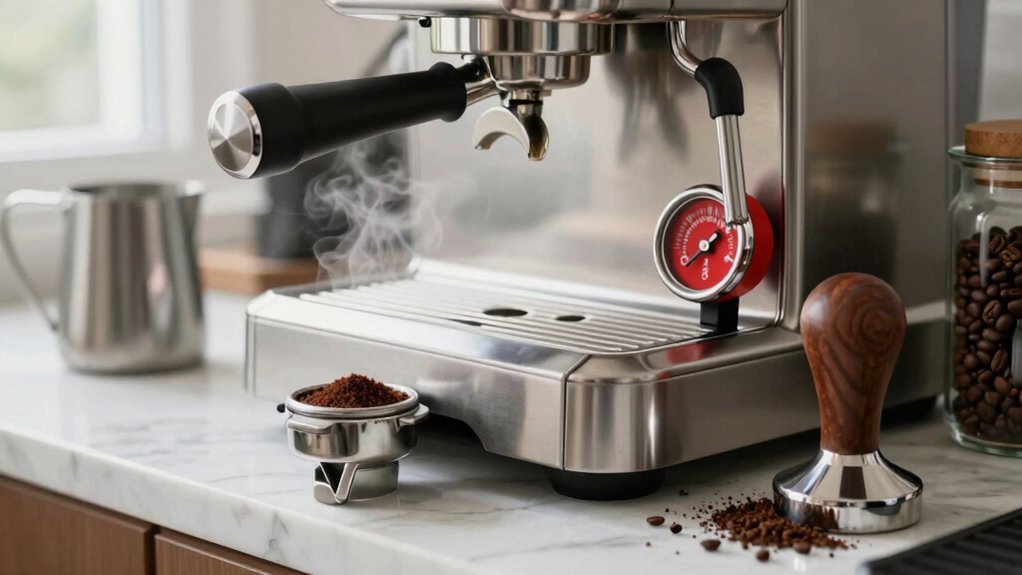
Choose a semi-automatic espresso machine with a 58mm portafilter and E61 group head for durability and compatibility with standard accessories. Aim for models with PID temperature control and a sturdy steam wand, ideally under $500. Prioritize brands like Breville or Rancilio with reliable support, available parts, and clear manuals. Pick dual boiler or heat exchanger systems if you want to steam and brew simultaneously. Compact designs under 12 inches wide fit small kitchens. A quality grinder and water filtration boost long-term results. You’ll find it easier to maintain consistent performance with the right setup in place.
Know Your Espresso Machine Types
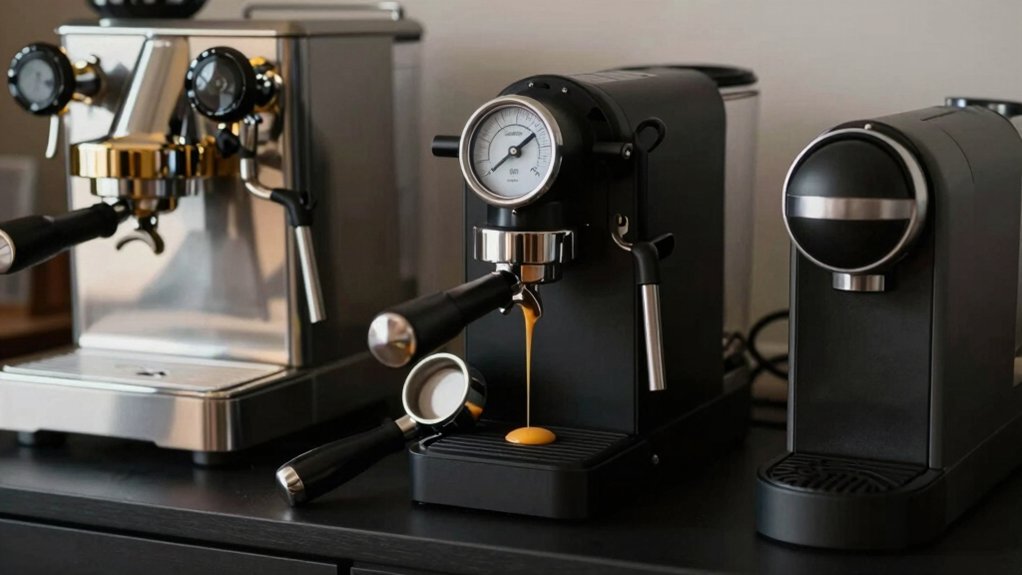
What kind of espresso experience are you after? If you want control without complexity, go semi-automatic—it’s the sweet spot for beginners. You manage shot timing, but the machine handles water pressure. Automatic models dose and brew with one click, but offer less learning. Manual machines give full control but demand skill.
Consider espresso machine types: single boiler units are affordable but can’t steam and brew simultaneously; dual boiler and heat exchanger models fix that. Look for an E61 group head, 58mm portafilter size, PID temperature control, and a sturdy steam wand for better results.
Set a Realistic Budget for a Beginner Espresso Machine
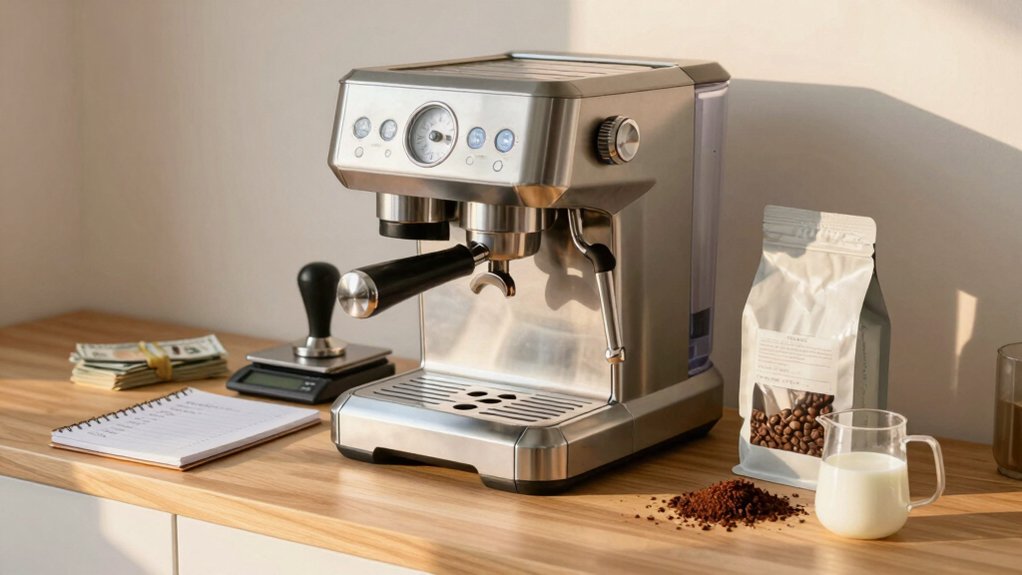
Set a budget that fits your needs by planning to spend $200–$500, which covers both a solid entry-level machine and a quality grinder—essential for better espresso.
Balance cost and features by choosing a semi-automatic model with durable parts and good service support, even if it means accepting plastic housing or a basic boiler.
Prioritize value over price by picking machines that hold resale value and allow upgrades, so you save money if you advance your skills later.
Set A Budget That Fits
How much should you really spend on your first espresso machine? Set a realistic budget
Balance Cost And Features
You’ve already decided on a spending limit, but now it’s time to make every dollar count by balancing cost and features in a way that supports real espresso quality.
Prioritize grinder quality and build quality over flashy automation. A solid semi-automatic with PID, pre-infusion, and shot timing controls delivers better long-term durability and performance. Look for strong price-to-value by checking materials, warranty, and parts/service availability.
- Choose a 58mm portafilter with a sturdy group head for consistency
- Opt for brass/copper internals and stainless steel housing for durability
- Confirm service support and warranty coverage to protect your investment
Prioritize Value Over Price
What separates a lasting investment from a costly misstep? Prioritizing value over price does. Don’t just chase the lowest cost—opt for a semi-automatic machine with solid build quality. Look for a stainless steel boiler, PID temperature control, and brass components for better durability. These features improve serviceability and extend lifespan. Ensure parts availability for easy repairs. Include water filtration to protect both flavor and machine. Machines from reputable brands often offer better resale value and upgrade paths. High build quality means fewer replacements, saving money long-term. Focus on performance, serviceability, and long-term savings, not just upfront cost. True value lies in reliability and consistency.
Pick an Espresso Machine That’s Easy to Use Every Time
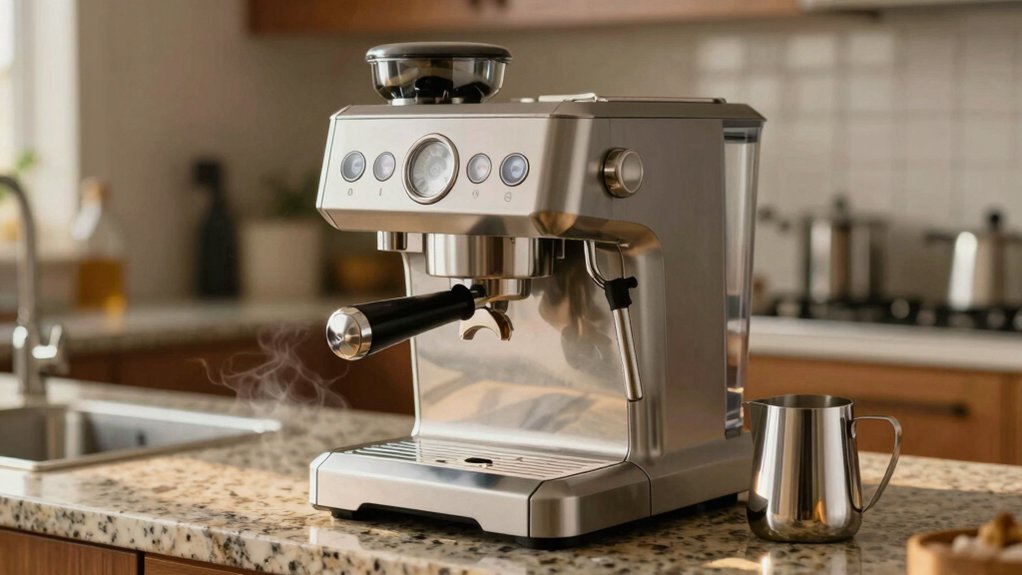
A well-designed espresso machine simplifies the brewing process without sacrificing control, which is especially important when you’re just starting out. Look for intuitive controls, a quick-heat system, and temperature stability via PID to ensure consistency. A semi-automatic model with user-friendly features gives you hands-on experience while minimizing errors.
- Choose a machine with a guided shot timer and steam control for better workflow
- Check boiler type and temperature stability to maintain brew quality
- Prioritize models with reliable after-sales support and accessible servicing
These features help you brew confidently every time.
Find a Compact Espresso Machine for Your Kitchen
You’ll want a compact espresso machine that fits neatly on your counter without crowding your workspace—look for models under 12 inches wide and with water tanks no larger than 1 liter.
Make sure it matches your cabinet height and counter depth so you can store it easily and keep room for daily prep.
Choose a small-footprint machine with simple controls and key features like a 58mm portafilter and solid steam power for real espresso results.
Compact Design Benefits
One key advantage of choosing a compact espresso machine is the efficient use of counter space, especially important in small kitchens or apartments where every inch counts. A space-saving compact design minimizes your countertop footprint without sacrificing core features. You’ll find many beginner-friendly models include a 58mm portafilter, PID temperature control for heat stability, and easy cleaning access. Though they often have a small boiler and reservoir water system, which means more frequent refills, they still deliver solid performance.
- Fits neatly in tight spaces
- Simplified setup with reservoir water
- Prioritizes essential features like PID and 58mm portafilter
Space-Saving Placement Tips
Where can you place an espresso machine without cluttering your kitchen? Choose a compact model with a small footprint and proper counter height to fit neatly under-cabinet. Look for space-saving designs that include an accessible water tank or reservoir, allowing easy refills without moving the unit. Prioritize single boiler or heat-exchanger systems—they’re lighter, cheaper, and better suited for tight spaces than dual boilers. Check that the portafilter size (like 54mm or 58mm) works with your tools and available clearance. Some machines even offer portability, letting you store them when not in use. Always confirm measurements before buying to ensure a seamless fit in your layout.
Small Footprint Models
Compact espresso machines fit neatly into smaller kitchens without sacrificing key performance features. When choosing small footprint models, you want a beginner-friendly design that balances size with function. Look for a compact footprint under 12 inches wide, ideal for tight counters.
- Pick an espresso machine with a 58mm portafilter and solid steam capability for better control and milk texturing
- Check reservoir size (70–100 oz typical) and fast heat-up speed from efficient boiler type like ThermoJet
- Ensure easy maintenance access, including drip tray and three-way solenoid, so cleaning stays simple
How to Make Milk Frothing Easy as a Beginner?
Why does milk frothing seem so tricky at first? Because it requires timing, technique, and consistency most beginners haven’t built yet. The good news? You can simplify it with the right gear. Look for a machine with an automatic steam wand—some even offer assisted frothing or guided tutorials. Choose one with adjustable presets for steam pressure and a high-quality steam wand tip, like a 2-hole professional design, to create smooth microfoam. A short warm-up time ensures you steam milk quickly after pulling a shot. Pair that with integrated scales and beginner-friendly features, and you’ll be crafting café-quality drinks with far less guesswork.
Know Why Temperature Control Matters for Beginner Espresso Machines
Getting your milk texture right means nothing if the shot underneath lacks balance, and that starts with stable brewing temperatures. As a beginner, your espresso machine’s temperature control directly impacts extraction stability and shot consistency. A PID controller maintains your brew temperature within the ideal 195–205°F (90–96°C) range by regulating the boiler. Without it, fluctuations ruin clarity and sweetness. Look for models with clear temperature readouts and real adjustable settings—some only fake PID. For beginners, the right mix of PID, pre-infusion, and flow control ensures even water interaction.
- PID ensures boiler stability
- Pre-infusion softens initial extraction
- Flow control and readouts boost precision
Choose an Espresso Machine With Strong Support and Easy Maintenance
When you’re starting out, picking an espresso machine that’s backed by solid support and simple maintenance can save you time, money, and frustration. Look for brands with strong service networks—like Breville, Rancilio, or Lelit—since they offer reliable warranty options, detailed manuals, and easy parts availability.
Choose models with widespread accessories compatibility and standard parts like 58mm portafilters or E61 groups for better brand reliability. Check for clear troubleshooting guides and readily available spare components. Good espresso machine support means access to responsive customer service and online resources.
Prioritize maintenance-friendly designs and proven parts availability so upkeep stays simple and affordable over time.
Conclusion
Choose a beginner-friendly espresso machine that fits your kitchen space and budget, typically between $200 and $600. Opt for models with automatic settings, like the Breville Bambino Plus or De’Longhi EC155, for consistent results. Prioritize machines with built-in grinders, stable temperature control, and easy milk frothing. Regular cleaning and descaling every 3–6 months ensure longevity. Check warranty and customer support availability.
