
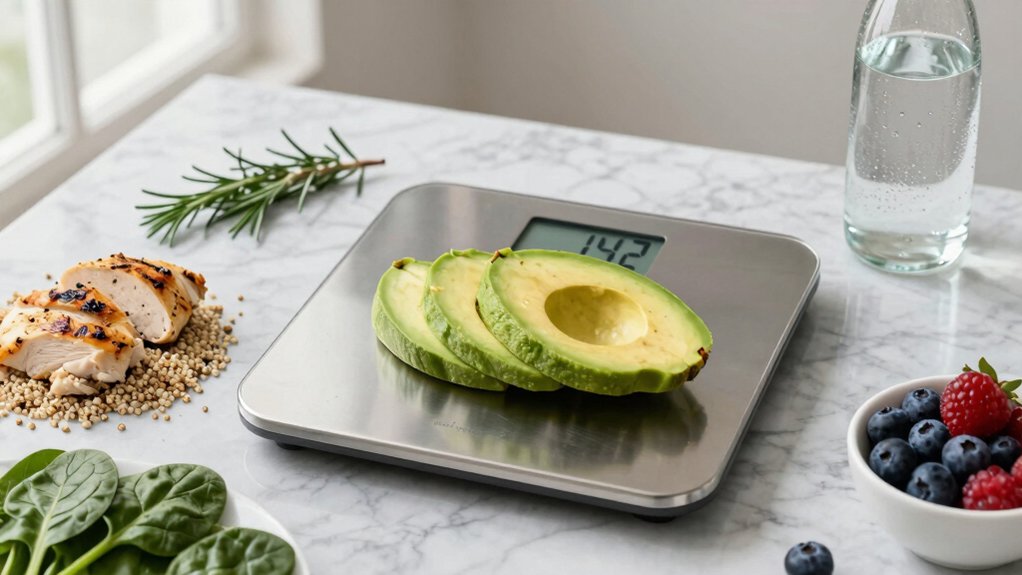
You get more accurate calorie and nutrient tracking when you weigh food instead of using measuring cups. A nutrition scale eliminates packing errors—like getting 100 g of tomatoes exactly, which delivers 237 mg potassium and 24 mg phosphorus. You control portions down to the gram, critical for managing sodium, potassium, and protein. The tare function lets you add ingredients in one bowl, reducing cleanup. Small weight differences—like 25 g of tomato—impact daily totals. Better precision means better health outcomes—and there’s more to how this transforms your daily routine.
Why Weighing Beats Measuring by Volume
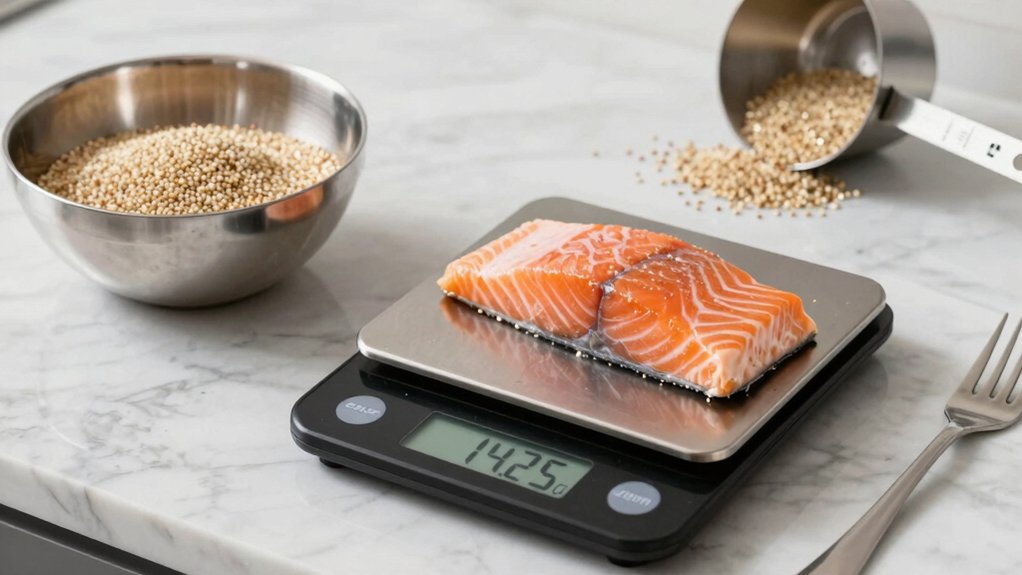
Why guess how much you’re really eating when a simple step can ensure accuracy? You’re better off using a nutrition scale—volume vs weight shows why. Volume measurements change with how you pack items like flour or pasta, but weight-based measurement doesn’t. That means better calorie accuracy and nutrient consistency. For example, 100 g of tomatoes delivers 252 mg potassium and 26.9 mg phosphorus—exact numbers matter. Kitchen scales with a tare function make ingredient weighing easy and cut cleanup. You get precise portion control, supporting reliable meal planning. With digital scales, you skip guesswork, ensuring every dish matches your goals through accurate, repeatable results.
How a Food Scale Controls Potassium, Sodium, and Protein

How much potassium are you really consuming with that tomato salad? Without a food scale, you might be off by hundreds of milligrams. Weighing ingredients guarantees accurate measurement of potassium, sodium, and protein—critical for kidney-friendly diets. A 25g difference in tomatoes adds 63mg more potassium than intended, skewing your nutrient tracking. Using a food scale improves portion control and consistency in nutrition data.
- Prevents excess potassium and phosphorus intake
- Supports precise protein and sodium tracking
- Guarantees reliable nutrient tracking across meals
Weighing empowers accurate measurement for better health outcomes.
Weigh Once, Clean Less: Simplify Meal Prep
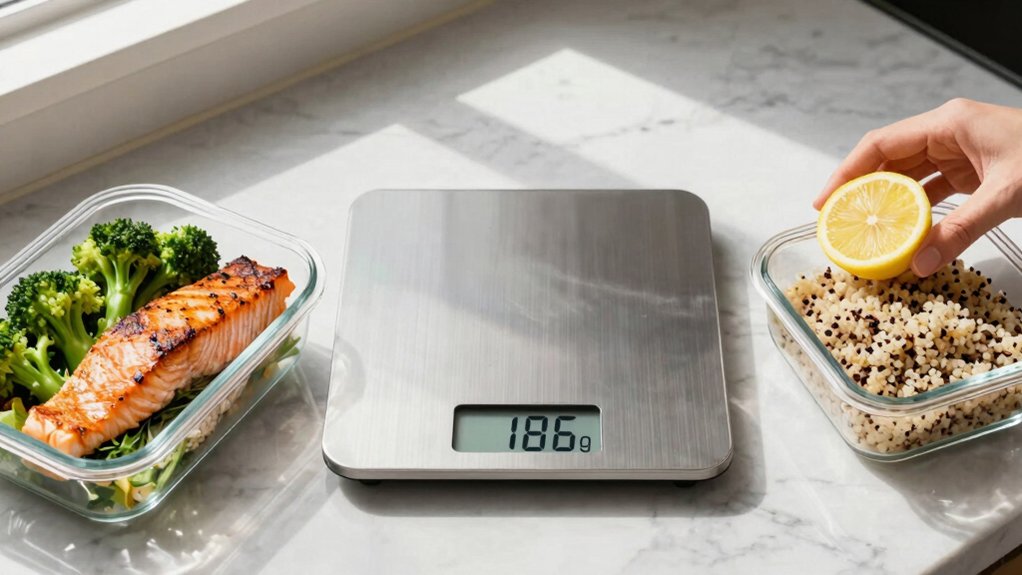
Ever wonder why meal prep feels so messy? You can simplify it with a kitchen scale. Use the tare function to weigh once and add each ingredient to a single bowl—no extra cups or spoons. This weigh-and-add method supports accurate measurement and portion control, especially for multi-ingredient dishes like fish tamales. A compact food scale reduces cleanup by eliminating multiple containers. With precise taring between additions, you maintain consistency and efficiency. These food scale benefits streamline prep time and reduce dishwashing. For kidney-friendly recipes, this means fewer errors and minimal mess—just place, weigh, and go.
Know Your Real Portion Sizes: No More Guesswork
You’ve already streamlined meal prep by weighing ingredients in a single bowl, cutting down on both effort and cleanup. Now, focus on knowing your real portion sizes—no more guesswork. Using a nutrition scale gives you accurate measurement, revealing how often you underestimate portions. Weighing food with kitchen scales ensures better portion control and supports precise calorie tracking and protein intake. For effective meal planning, a food scale removes variability.
- Weighing food beats cups or spoons for accuracy
- A nutrition scale exposes hidden calories in eye-balled servings
- Consistent weighing improves long-term portion control
Pick a Food Scale That’s Accurate and Easy to Use
A reliable digital scale makes all the difference when precision matters. Choose a digital scale with gram precision and a tare function to simplify portion control and meal planning. Look for high readability—opt for a large display that’s easy to see, even with big bowls. Accuracy is key, so pick a model with a maximum weight of at least 5 kilograms (11 pounds) to handle full meal preps. Stainless steel platforms resist spills and simplify cleaning. Go for compact, cordless designs (around 9×6 inches) for easy storage. These features ensure your scale supports consistent, accurate tracking without hassle.
Conclusion
You now see how a nutrition scale improves diet accuracy. Weighing food beats volume estimates—1 cup of spinach is 30g, but cooked quinoa can be 180g, affecting nutrient intake. A precise scale helps manage potassium, sodium, and protein, especially with dietary restrictions. You optimize meal prep, reduce cleanup, and learn true portion sizes. Pick a digital scale with 0.1g accuracy and tare function for best results.
