
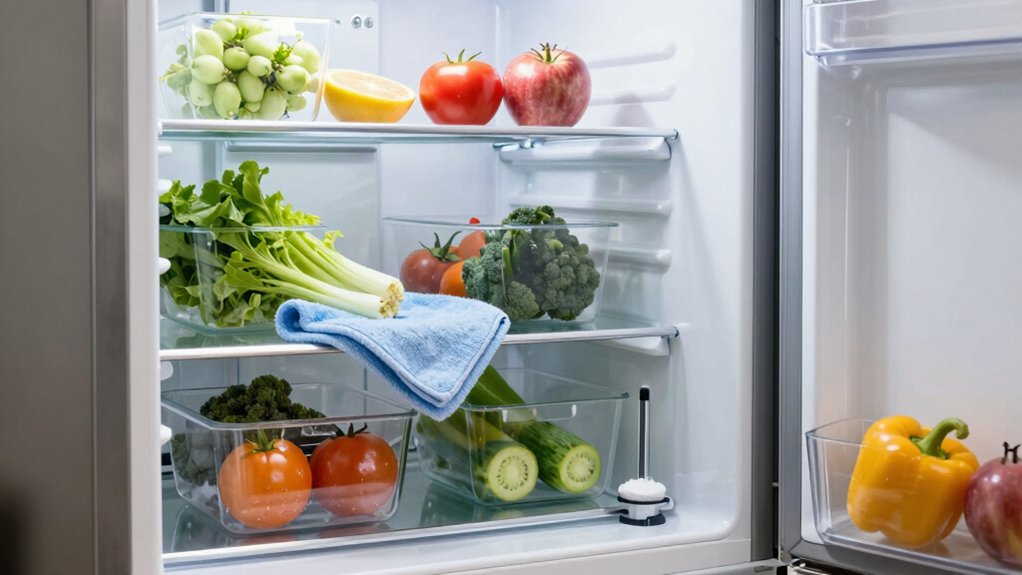
Unplug your fridge and remove all food, using coolers with ice packs to keep perishables safe. Clean interior surfaces, shelves, and drawers with warm, soapy water; use vinegar for mold and baking soda for odors. Vacuum condenser coils every six months to maintain efficiency. Wipe door seals with soapy water, check for damage, and clean the exterior. Keep the fridge at 37°F and the freezer at 0°F. Regular checks improve performance and extend lifespan. You’ll find even more ways to optimize care and avoid common issues with a few more steps.
Unplug and Prepare Your Fridge for Cleaning
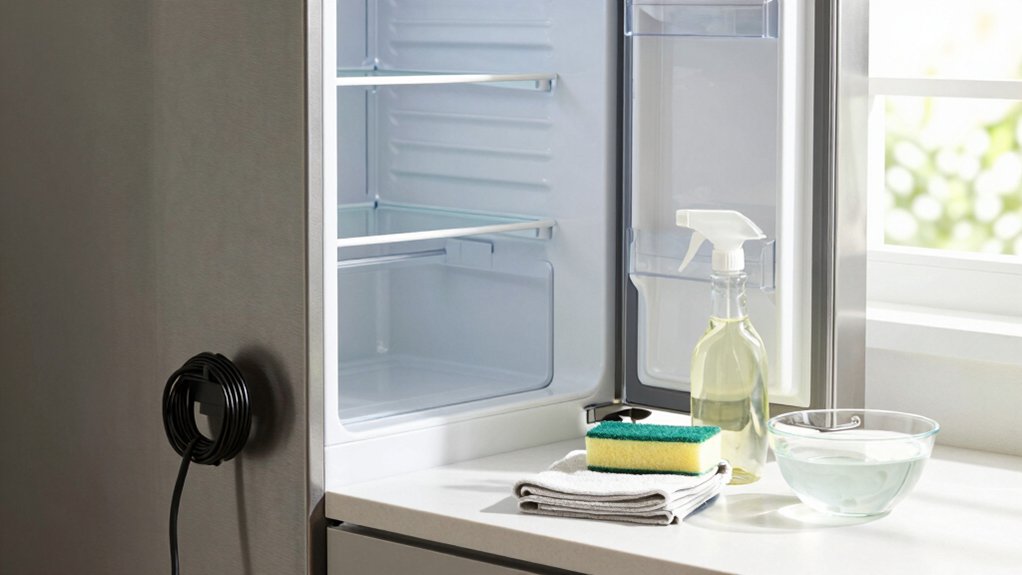
Why risk electrical hazards or spoil your food during a fridge cleaning? You shouldn’t. First, unplug the refrigerator or switch off power at the electrical panel—this is non-negotiable for Safety.
Never risk electrical hazards or spoiled food—unplug the fridge or cut power at the panel. Safety first, always.
Next, remove all food, placing perishables in coolers with ice packs; never leave them out more than two hours. Toss expired or spoiled items to maintain hygiene.
Take out shelves, drawers, and removable parts, setting them aside. Let them warm to room temperature before washing—sudden temperature changes can cause cracking.
You’re now Prepared for the next cleaning steps. Disconnecting power and organizing contents ensures a safe, efficient process with no avoidable risks.
Vacuum Condenser Coils and Under-Fridge Area
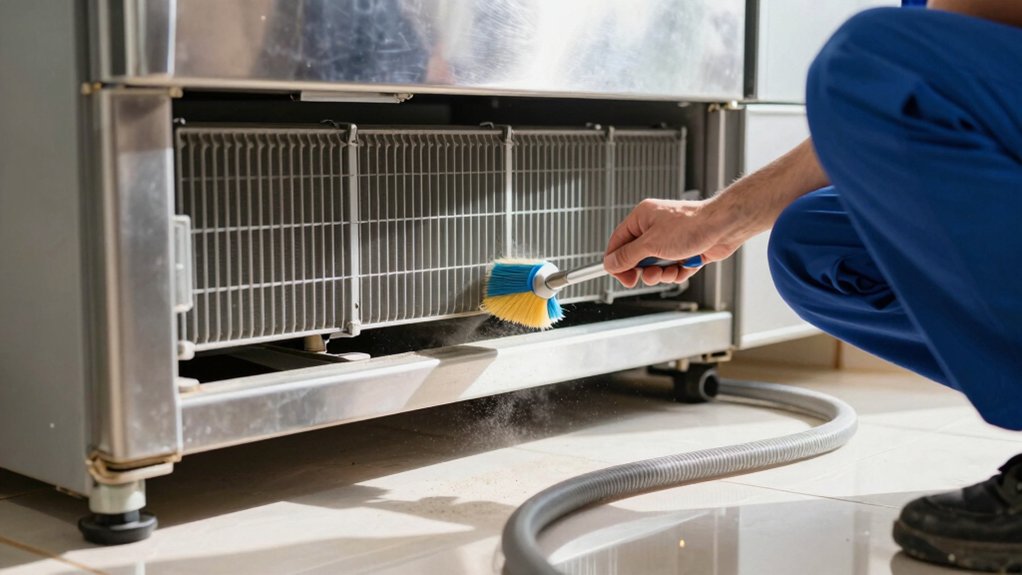
While your fridge sits quietly in the background, its condenser coils work hard to release heat and keep the interior cool—so it’s essential to keep them clean.
Unplug the refrigerator, then locate the condenser coils, usually at the back or underneath. Use a vacuum with a brush attachment—a key cleaning tool—to remove dust and debris from the coils and under-fridge area. For stubborn grime, gently loosen dirt with a long, soft-bristled brush before vacuuming.
Clean coils every six months, or more often with pets or in dusty spaces, to maintain efficiency. Afterward, plug the unit back in and let it reach proper temperature before restocking.
Clean Interior Surfaces, Shelves, and Drawers
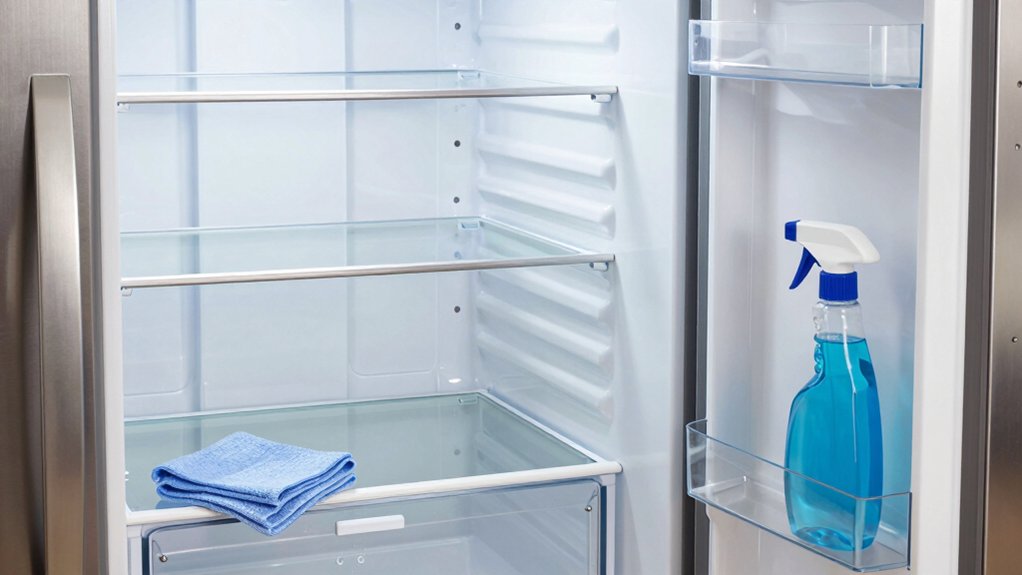
What does it take to keep your refrigerator’s interior truly clean? Unplug the unit, remove all food, and take out the shelves and drawers. Clean interior surfaces—walls, ceiling, and bottom—with warm water and dish soap, using a sponge to reach corners. For stubborn spots, apply vinegar or baking soda, then rinse with a damp cloth and dry. Wash shelves and drawers in the sink with hot soapy water, ensuring all residue is gone. Dry them completely before placing back. Always make sure interior surfaces are fully dry to avoid moisture buildup. This simple routine keeps your shelves, drawers, and entire fridge interior fresh and functioning efficiently.
Remove Mold and Odors Using Vinegar and Baking Soda
You can eliminate mold with undiluted vinegar by spraying it directly on affected areas and letting it sit for 10 minutes before wiping.
To neutralize odors, mix baking soda with warm water and wipe down the interior surfaces where smells linger.
After cleaning, dry everything thoroughly—moisture invites mold, so staying dry is key to preventing future growth and smells.
Eliminate Mold With Vinegar
How does your refrigerator stay mold-free and smelling fresh? Use vinegar during cleaning to effectively eliminate mold and prevent buildup. This natural solution cuts through grime and kills mold on contact without harsh chemicals.
- Remove shelves and drawers, then spray affected areas with undiluted vinegar.
- Wipe corners and crevices with a damp cloth to ensure full mold removal.
- Dry all surfaces thoroughly—moisture encourages mold regrowth.
- For stubborn stains, reapply using a warm water and vinegar mix.
Regular seasonal cleaning with vinegar keeps your fridge hygienic, odor-free, and running efficiently—every drop helps.
Neutralize Odors Using Baking Soda
Why does your refrigerator still hold lingering odors even after a thorough cleaning? Because odors often come from acidic residues and moisture that standard wiping misses. For effective refrigerator cleaning, use baking soda—it neutralizes odors by reacting with acids and absorbing moisture. Place an open box or bowl of baking soda on a shelf, replacing it every 30 days. For stubborn odors or mold smells, apply a paste of baking soda and water, wipe the area, then rinse and dry thoroughly. Baking soda won’t damage surfaces, so it’s safe for shelves, drawers, and gaskets. Use it after vinegar treatments if needed, but don’t mix them directly to avoid residue.
Prevent Future Growth And Smells
A clean refrigerator resists mold and holds fewer odors when maintained with the right routine.
- Remove shelves and drawers, spray vinegar on mold-prone spots, then wipe with a damp cloth—vinegar kills mold and neutralizes odor naturally.
- Dry all surfaces completely before reassembling to prevent moisture buildup that encourages mold.
- Tackle lingering smells by applying a baking soda paste to stubborn areas, then wipe clean—baking soda absorbs residual odor.
- Check behind and under the unit monthly; dust near the coils can trap moisture and worsen odor over time.
Stay proactive—clean spills immediately and repeat this process seasonally.
Clean Door Seals and the Exterior
Ever noticed how a grimy fridge door can quietly drive up your energy bill? Cleaning door seals regularly with warm, soapy water removes debris and prevents mold, ensuring a tight seal. Dry them thoroughly afterward to avoid moisture buildup. Check gaskets for cracks or brittleness—if damaged, replace them to stop cold air leaks and improve efficiency. For the exterior, especially stainless steel, use a specialized cleaner to prevent streaks and keep it looking sharp. Don’t forget to wipe down the surface to remove fingerprints and spills. Keep the area around the fridge clear and make sure doors close tightly to maintain optimal performance. Consistent cleaning helps efficiency and extends appliance life.
Check Coils, Seals, and Temperature Regularly
How often do you check the back or bottom of your fridge for dust buildup?
- Clean the coils every 6 months—more often if you have pets or live in a dusty area—to keep your compressor from overworking.
- Dusty coils can’t release heat efficiently, causing longer run times and raising energy bills.
- Check door seals regularly by doing the dollar bill test—if it slips out easily, replace them to maintain proper temperature.
- Monitor internal temperature: fridge at 37°F, freezer at 0°F, ensuring efficiency and food safety.
Conclusion
You’ve cleaned and maintained your fridge properly—now plug it back in. Keep coils dust-free every 3–6 months to maintain cooling efficiency. Check door seals monthly by closing a dollar bill in the door; if it slips out, replace the gasket. Set the fridge at or below 40°F (4°C) and the freezer at 0°F (−18°C). Regular upkeep prevents mold, reduces energy use, and extends appliance life.
