
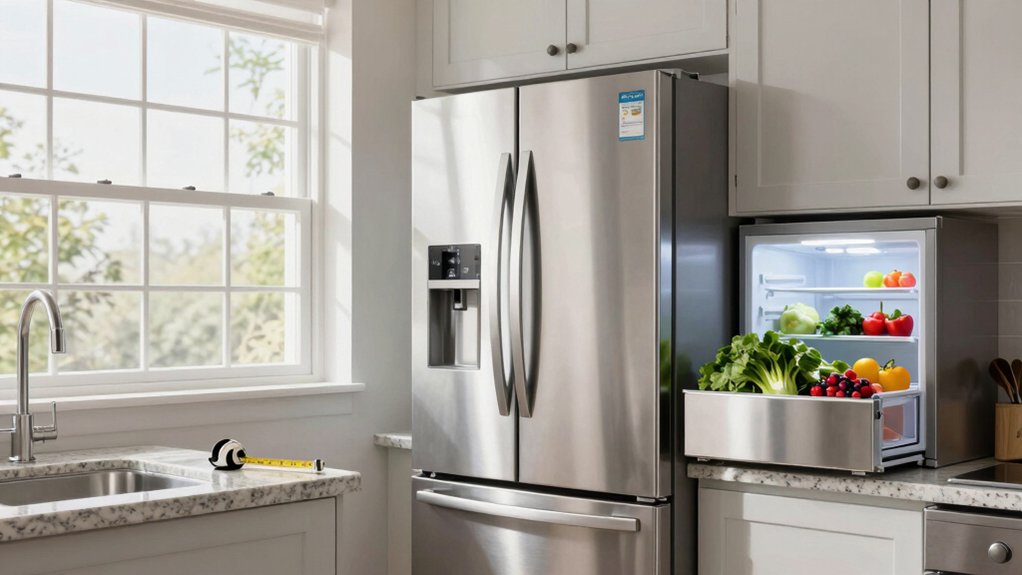
Measure your space down to the inch, accounting for uneven walls and leaving 1 inch for ventilation on all sides. Ensure the refrigerator fits through doorways and hallways, with room for door swings. Choose a style—like bottom-freezer or French door—based on your kitchen layout and access needs. Opt for Energy Star models to save on energy; top-freezers use less power. Check CR reliability scores, since 33% of units need repairs by year five. Brands vary in durability and service. Ice makers often fail. Counter-depth and built-in models integrate well but cost more. Prioritize fit, efficiency, and proven performance. The right choice balances size, style, and long-term reliability. Smart planning now prevents costly mistakes later—discover which features matter most for your kitchen’s workflow and upkeep.
Measure Your Space for the Right Refrigerator
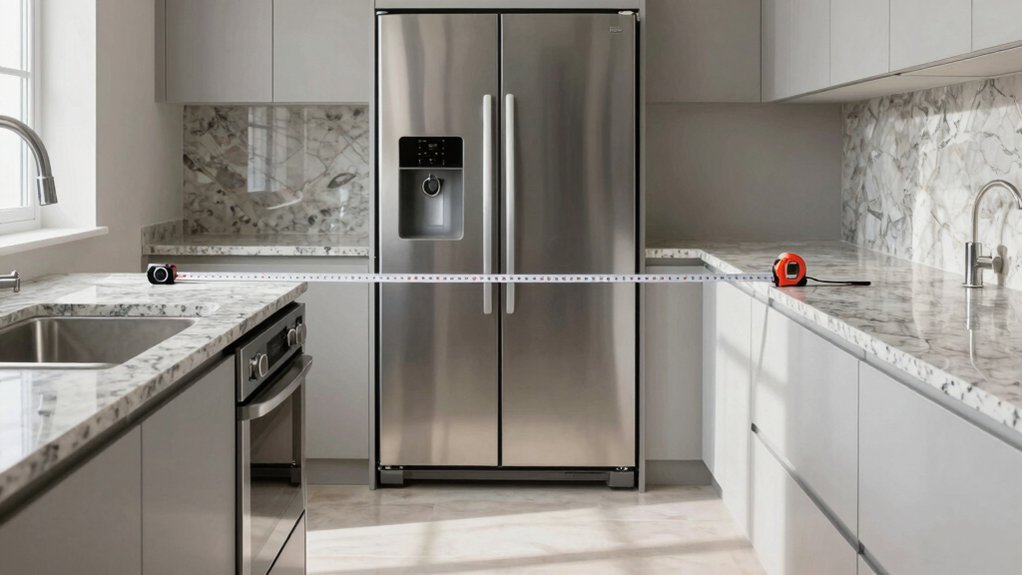
How do you ensure a new refrigerator fits perfectly in your kitchen? Start with accurate space measurements, checking the width, height, and depth in multiple spots to account for uneven walls. Create a measurement plan that includes 1 inch of ventilation space on each side and above, plus space behind for airflow. Confirm door swing clearance so doors open fully.
Verify the refrigerator will fit through doors by assessing the doorway pass-through and mapping the full delivery path, including hallways and stairs. Proper space planning ensures it not only fits in its spot but can actually fit through doors during delivery.
Pick the Right Refrigerator Style for Your Kitchen
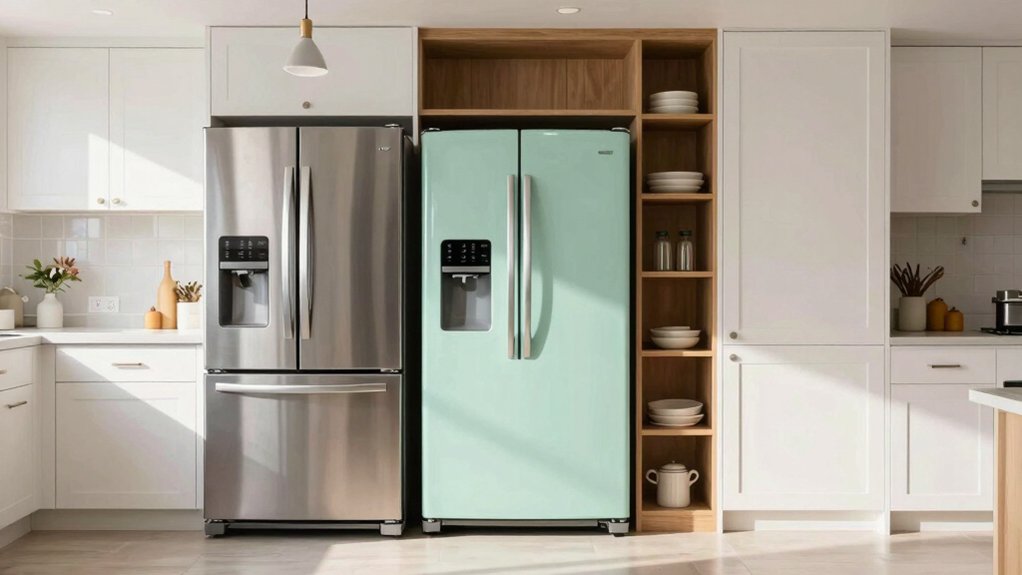
What kitchen layout works best with your lifestyle? If your kitchen space is tight, a bottom-freezer or French door model offers a smart fit.
French door styles suit larger storage capacity needs, while bottom-freezers keep fresh food at eye level.
French door fridges offer ample storage, while bottom-freezers place fresh foods at eye level for easy access.
Side-by-side models need less door swing clearance, ideal for compact footprints.
For seamless looks, go counter-depth or built-in—these options enhance integration and trim the kitchen layout’s bulk.
Built-in and panel-ready units boost aesthetics but cost more.
Consider how door swing affects traffic flow.
Prioritize smart storage capacity and a clean design.
Don’t forget to check ENERGY STAR ratings early—you’ll balance efficiency with style.
Find the Most Energy-Efficient Models
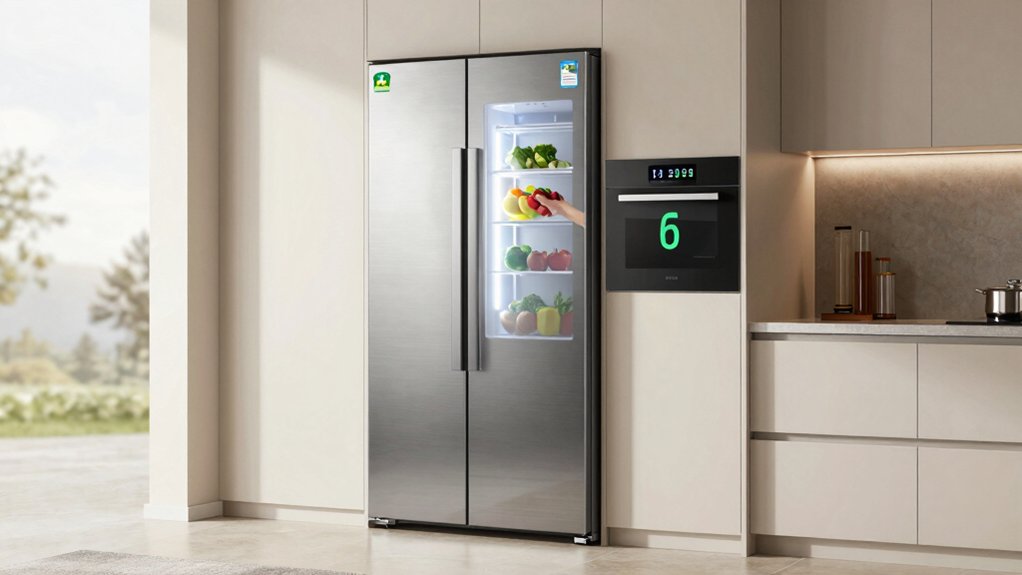
You’ve picked a refrigerator style that fits your kitchen layout and daily routine, but don’t stop there—how it runs matters just as much. For better energy efficiency, check both the Energy Star label and EnergyGuide tag to compare yearly operating costs and kWh use.
Your refrigerator type affects consumption—top-freezer models often use less energy than French door or counter-depth styles. Always allow proper ventilation clearances during space planning to ensure optimal cooling and efficiency.
- Look beyond Energy Star: compare actual kWh/year
- Top-freezer units typically have lower operating costs
- French door and counter-depth models may need more energy
- Poor ventilation clearances reduce efficiency and performance
Trust the Most Reliable Refrigerator Brands
Which brands actually deliver the most dependable refrigerators over time? CR reliability ratings, based on performance data from over 66,500 refrigerators bought between 2014 and 2024, help identify the most trustworthy refrigerator brands.
About 33% of units need repairs by year five, but top-freezer models consistently show better model durability.
Ice maker issues remain a common flaw across many brands.
CR tests over 260 models annually, generating brand scores that reflect reliability, energy efficiency, and after-sales service.
These scores help predict long-term performance beyond just advertised features, giving you a clearer picture of what to expect.
Conclusion
You’ve measured your space, chosen a style that fits your kitchen layout, and compared energy efficiency using the ENERGY STAR rating—models with 4 or 5 stars use about 15–20% less energy. You’ve also considered reliable brands like LG, Whirlpool, and GE, known for lower repair rates. Now, you’re ready to make a smart, informed decision that balances size, efficiency, and durability for your home.
