
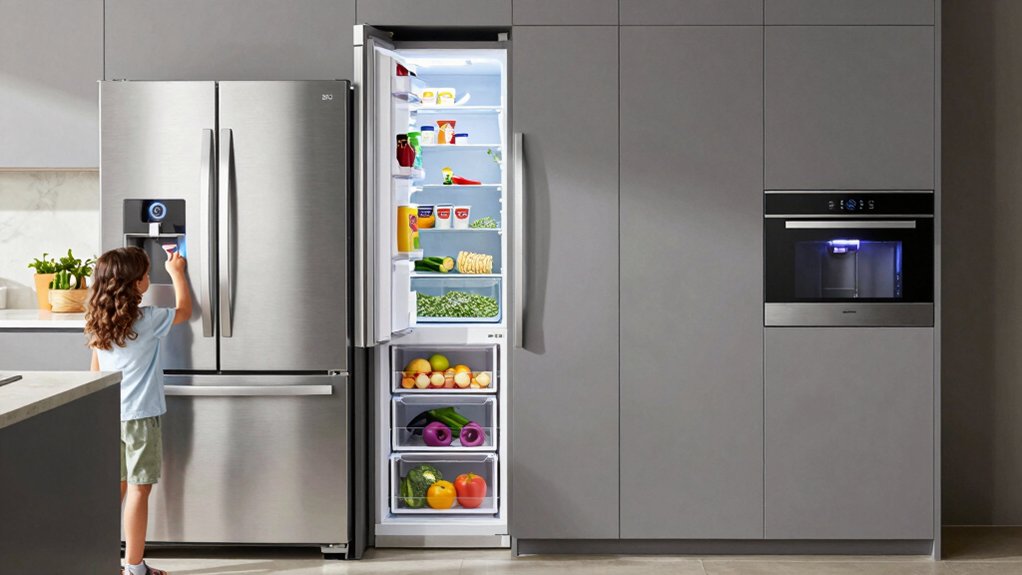
French door vs side-by-side refrigerator: You get wider fresh-food shelves—up to 18 inches—in a French door model, ideal for large platters and bulk storage, but accept a smaller freezer, typically 5–7 cu ft. Side-by-side fridges offer a tall, narrow footprint that fits tight kitchens and provide 8–10 cu ft of freezer space with easier vertical access. French doors prioritize accessible refrigerated storage; side-by-sides balance fresh and frozen capacity. Your cooking habits and kitchen layout will shape which design serves you best.
What’s the Real Difference Between French Door and Side-By-Side Fridges?
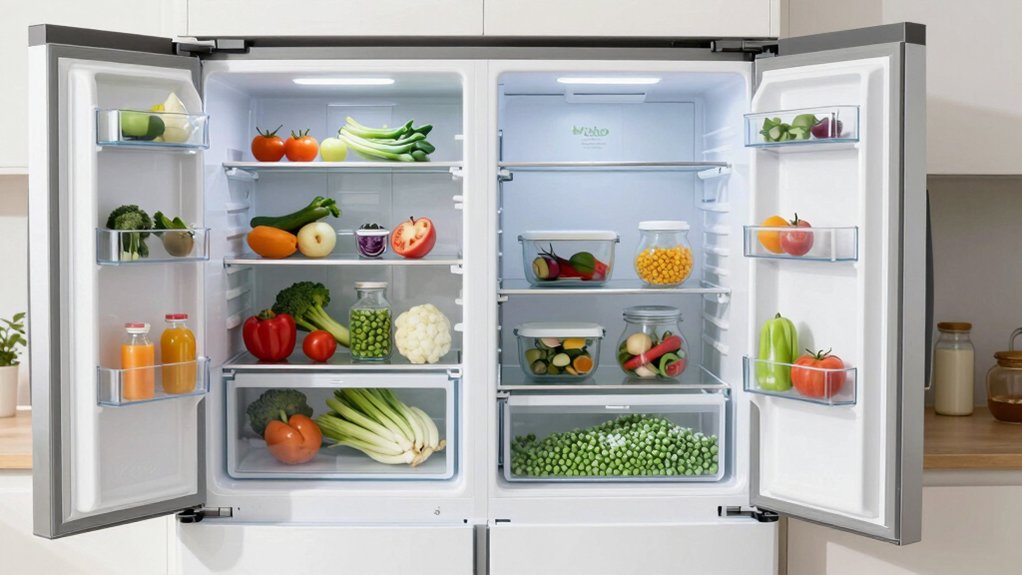
What really sets French door and side-by-side refrigerators apart?
With a French door model, you get wider shelves and greater fridge storage capacity, ideal for bulky items, while the bottom freezer keeps frequently used food up top.
Side-by-side fridges split the unit vertically, offering equal, eye-level access to fresh and frozen foods but narrower compartments.
French door units often provide larger overall fridge space and better cooling performance, minimizing hot spots.
Though side-by-sides typically offer more freezer storage and a smaller door swing, French door designs are favored for maximizing fresh-food capacity and flexibility in organization.
How Do Door Layouts Impact Kitchen Fit and Access?
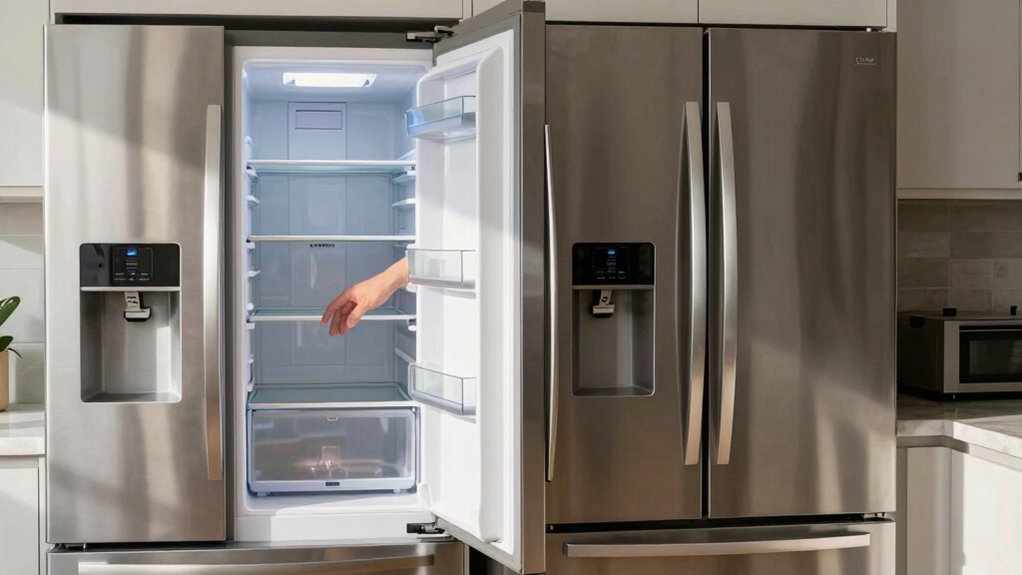
French door and side-by-side refrigerators don’t just differ in how they store food—they also affect how well the appliance fits in your kitchen and how easily you can use it every day. Your kitchen fit depends heavily on door layout and available door swing clearance. French door models require wider arcs to open, often needing 24 inches or more on each side, which can be tough in tight spaces.
Side-by-side refrigerators, with their narrow vertical doors, need less swing space, making them ideal for compact layouts. Their door layout allows easier access beside islands or countertops, while French doors might block walkways when fully opened.
Which Fridge Offers More Storage Capacity?
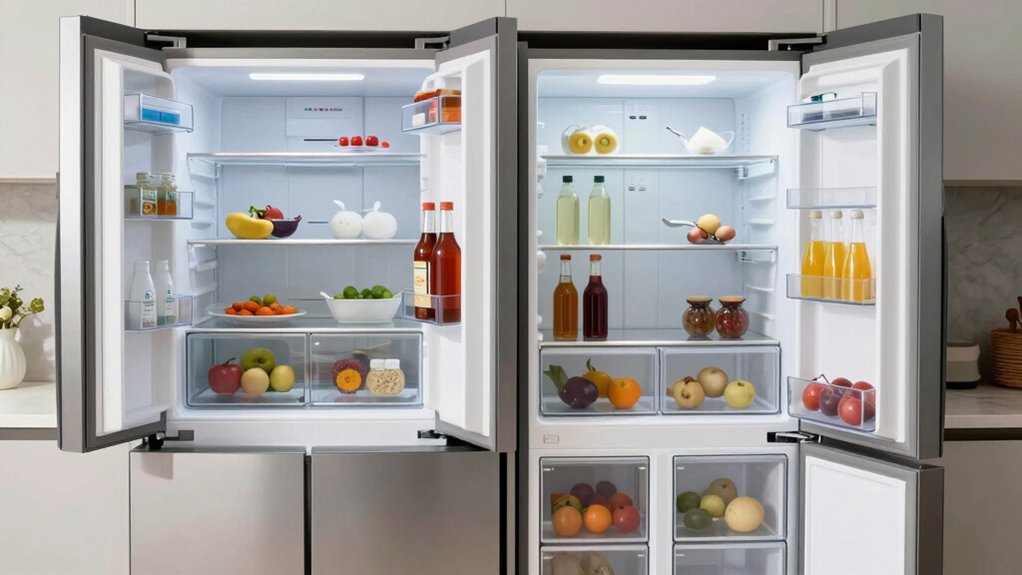
You’ll find both French door and side-by-side fridges offering around 25 cubic feet total, but they split that space differently.
You get more fresh-food room in a French door model, with wider shelves and greater fridge capacity, while the side-by-side gives you a taller, narrower freezer that boosts frozen storage.
Your choice depends on whether you prioritize shelf space for groceries or extra freezer room for frozen meals.
Total Cubic Feet Compared
How much storage do you really need when choosing between French door and side-by-side refrigerators? It depends on your household’s needs and how you use cubic feet across refrigerator styles. Most French doors offer around 25 total cubic feet, prioritizing fridge capacity with about 2 extra cubic feet in fresh food storage. Side-by-sides match in overall capacity but split space vertically, increasing freezer utility. Here’s a comparison:
| Feature | French Door | Side-by-Side |
|---|---|---|
| Total Capacity | ~25 cu ft | ~25 cu ft |
| Fridge Space | Larger | Slightly less |
| Freezer Space | Smaller | Greater |
| Space Allocation | Fridge-focused | Balanced |
Interior Layout Efficiency
What really matters when comparing French door and side-by-side refrigerators isn’t just total cubic feet—it’s how that space is organized and used. You’ll find French doors maximize fridge space with wide, open interiors and adjustable shelves, ideal for bulky items. Their interior layout typically offers about 25 cu ft total, with more fresh food room. Side-by-sides split space vertically, often trading some fridge capacity for higher freezer capacity. You get efficient access and tall frozen storage, great in narrow kitchens. While both offer smart organization, your choice depends on whether you prioritize fresh storage or balanced freezer capacity.
Fresh Vs Frozen Space
When it comes to storage capacity, does your household prioritize fresh ingredients or frozen foods? Your choice in French door vs side-by-side impacts fresh vs frozen space significantly.
| Feature | French Door | Side-by-Side |
|---|---|---|
| Refrigerator capacity | ~16 cu ft (greater fresh space) | ~14 cu ft |
| Freezer space | Narrower, less organized | Taller, ~6 cu ft, better for frozen goods |
French door models offer larger refrigerator capacity, ideal for fresh produce and wide shelves. Side-by-sides balance fresh vs frozen space, suiting families freezing meals. Consider your usage—maximize fresh storage or frozen organization—based on your needs and available kitchen space.
How Do Fresh and Frozen Zones Compare?
You’ll find fresh items easier to reach in French door models, where the fridge section dominates with wider shelves and eye-level crisper drawers that reduce bending.
If you stock up on frozen goods, side-by-sides give you more vertical freezer space with multiple shelves, though their narrow fridge sides can struggle with large containers.
The layout differences directly affect how you access daily essentials—French doors favor fresh-food convenience, while side-by-sides balance frozen storage and fresh access more evenly.
Fresh Zone Accessibility
How easily can you reach your everyday ingredients? With French door fresh-food access, you benefit from eye-level shelves that make grabbing snacks or dinner items quick and simple. The wide, adjustable shelves fit large platters and tall containers, boost mid-height accessibility for daily use. Crisper drawers span the full width, offering generous space and humidity controls to keep produce fresh longer. In contrast, side-by-side models provide decent fresh-zone reach but use narrow vertical compartments, limiting space for bulky items. While both types offer convenient access, French doors excel when storing and retrieving common fridge items efficiently and comfortably.
Frozen Storage Capacity
Why does freezer space matter if you rarely stock frozen foods? Because when you do need it, you want space that works. If freezer capacity is a priority, a side-by-side refrigerator usually outperforms. These models split space more evenly, giving you more room for frozen items. In contrast, French door fridges often feature a bottom freezer, which tends to be narrower and shallower. You’ll gain in fresh food access but may lose in deep-freeze flexibility.
- Side-by-side offers up to 50% more freezer capacity than many bottom freezer models
- Bottom freezer drawers limit bulky item storage
- Side-by-side suits bulk freezers and frozen meal prep
- French door designs favor fridge space over frozen storage
Compartment Layout Design
What kind of layout works best for your kitchen habits—wide, accessible shelves or balanced fridge-freezer access? With a French door model, you get a wide compartment layout that prioritizes fresh food storage on eye-level shelves. Side-by-side units split vertically, giving near-equal access but narrower spaces. Your choice shapes how easily you store platters or freeze bulk items.
| Feature | French Door | Side-by-Side |
|---|---|---|
| Shelf Width | Wide, fits large trays | Narrow, limited clearance |
| Fresh-Food Access | Top, eye-level | Vertical split |
| Freezer Space | Bottom, smaller | Tall, deeper |
What Features Make French Doors Stand Out?
Ever wonder what sets French door refrigerators apart in modern kitchens? Their smart layout and French door storage give you better customization and easy access. With wide shelves and a spacious fridge compartment, you can store bulky items without hassle. The bottom freezer keeps frequently used items at eye level, improving usability.
- Dual-door top design maximizes fresh-food access
- Humidity-controlled crispers enhance food preservation
- Flexible bins (like Flexi-Slide) adapt to large platters
- Advanced cooling reduces cold-air loss when one door opens
These features offer a modern aesthetic, greater capacity, and energy-saving performance, making French doors a popular choice despite their higher price.
Are Side-By-Side Fridges More Space-Efficient?
Side-by-side refrigerators make efficient use of vertical space with their tall, narrow footprint, fitting well into compact kitchens where floor space is limited. Their space efficiency shines in tight layouts, though interior shelf width is narrower—sometimes under 12 inches—restricting large casserole placement. While you gain freezer access and a slim side-by-side footprint, you sacrifice some fresh-food storage. French door capacity often exceeds side-by-sides by 1–3 cubic feet for comparable models. Below is a comparison:
| Feature | Side-by-Side | French Door |
|---|---|---|
| Avg. Width | 33 in | 36 in |
| Shelf Width | ~11–12 in | ~15–18 in |
| Freezer Size | 8–10 cu ft | 5–7 cu ft |
| Door Swing Clearance | Low (parallel) | High (wide arc) |
Choose Based on Cooking and Family Needs
How do your cooking habits and household size influence your refrigerator choice? Your storage needs and kitchen layout play a big role in picking between a French door and side-by-side model.
- French door designs offer spacious, eye-level fridge shelves, ideal for large platters and frequent fresh food access
- Side-by-side units provide stronger freezer capacity with vertical organization for quick reach
- If you buy in bulk or cook often, French door models reduce bending with deeper, wider fresh food storage
- For tighter kitchens or budget-focused households, side-by-side fridges fit easier and often cost less upfront
Conclusion
You now know the key differences between French door and side-by-side refrigerators. French models offer wider shelves, easier access to fresh food, and typically 400–500 cubic feet of total storage. Side-by-sides provide better frozen food organization with equal split compartments but narrower shelves. Your choice should match your kitchen space, cooking habits, and family size. Prioritize layout, capacity needs, and long-term convenience when deciding.
For a detailed refrigerator buying guide, check out this Consumer Reports article:https: //www. consumerreports.org/refrigerators/best-refrigerator-buying-guide/
