
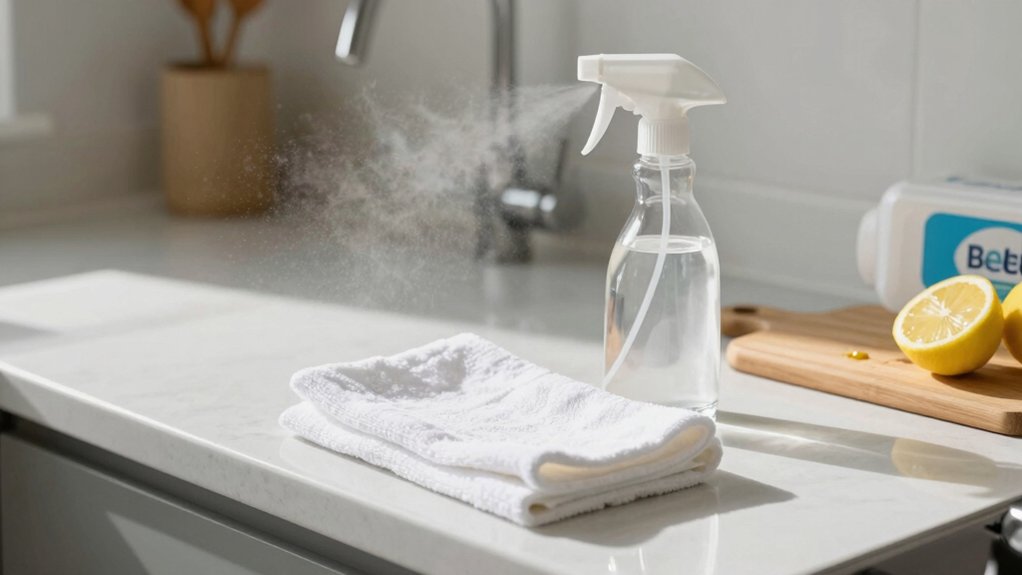
Wipe spills immediately with paper towels, then clean with warm, soapy water and disinfect using vinegar followed by 3% hydrogen peroxide. Disinfect after handling raw meat or eggs, and dry surfaces fully to cut moisture. Use microfiber cloths and avoid acidic cleaners on stone. Clear clutter daily, use cutting boards and trivets, and choose non-porous countertops like quartz for easier maintenance. Seal granite yearly. More smart strategies follow.
Clean Spills Immediately to Stop Germs
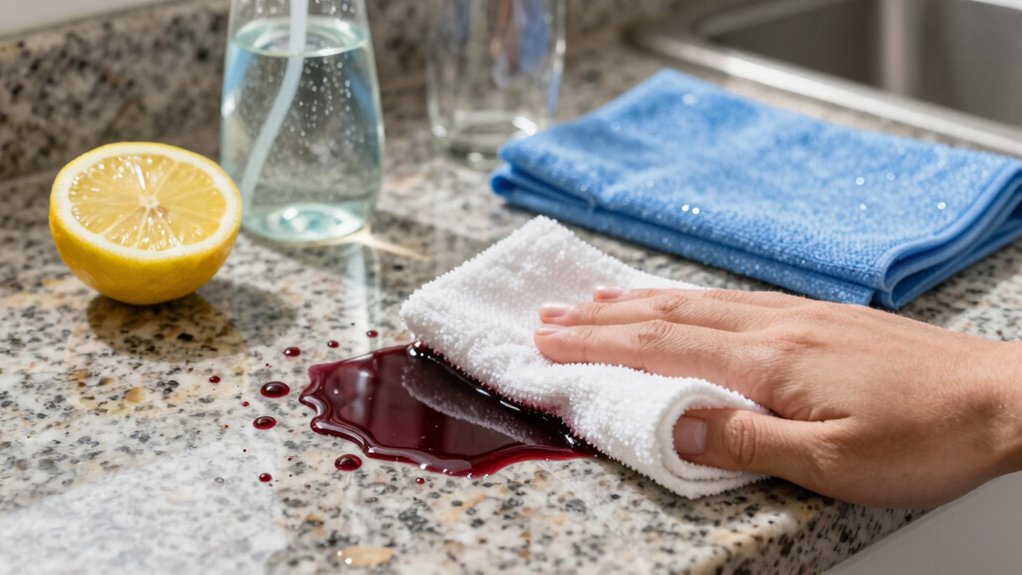
Cleaning up spills right away is one of the most effective ways to keep your countertops germ-free. You can’t let spills linger—residues feed bacteria and trap moisture, creating a breeding ground for germs. Wipe with paper towels first to remove visible messes, but don’t stop there; clean with warm, soapy water to lift grime. That step alone won’t kill all pathogens, so you must disinfect afterward. Proper countertop care means addressing both cleanliness and sanitation. Drying the surface post-cleaning cuts moisture, discouraging microbes. Immediate action interrupts bacteria growth, making your kitchen safer. Quick, thorough responses to spills reduce contamination risks significantly.
Wipe Countertops Daily With Safe Cleaners
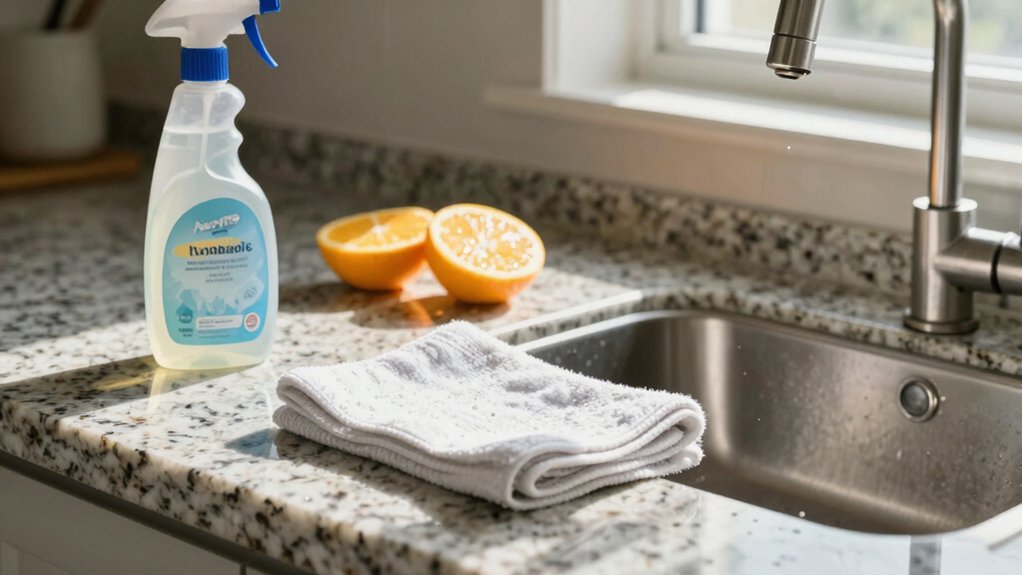
You stay ahead of bacteria by addressing spills right away, but daily maintenance takes your countertop hygiene a step further. Make a habit of giving your countertops a daily wipe using safe cleaners like warm water and all-purpose cleaner. Use a microfiber cloth to effectively lift grime without damaging sealants. This routine cleaning prevents germ buildup, especially on non-porous surfaces like quartz. After cleaning, dry surfaces immediately to discourage mold and bacteria growth. For disinfecting, apply white vinegar followed by 3% hydrogen peroxide—no rinsing needed. Skip acidic cleaners on natural stone to avoid etching. Stay consistent with cleaning and disinfecting for long-term results.
Disinfect After Raw Food and Meals
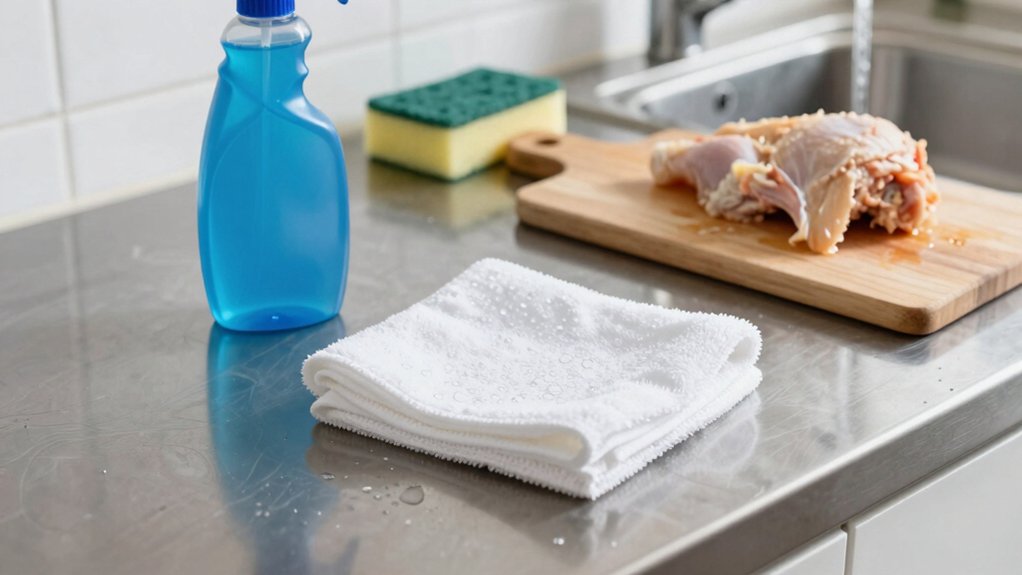
You should clean as you go, wiping up spills and residue right after handling raw meat, eggs, or produce to prevent cross-contamination. Focus on disinfecting cutting zones—especially where raw food leaks juices—using a vinegar-hydrogen peroxide method that kills 99.9% of bacteria when applied separately. Always let the surface air dry and keep your cloths sanitized to avoid redepositing germs.
Clean As You Go
Why do some kitchens stay germ-free while others become breeding grounds for bacteria? You can prevent contamination by choosing non-porous surfaces and committing to clean as you go. Wipe up spills immediately with soapy water—this removes debris but doesn’t kill germs. Then, disinfect daily, especially after handling raw food. Use vinegar first, followed by hydrogen peroxide; this two-step method kills nearly 100% of bacteria and viruses when sprayed sequentially and left to air-dry. Always dry countertops thoroughly—moisture breeds mold and bacteria. This routine keeps your surfaces truly clean and limits cross-contamination risks in high-traffic kitchen zones.
Disinfect Cutting Zones
How effectively are you disinfecting your cutting zones after handling raw food? Proper disinfection is crucial for cross-contamination prevention, especially after raw meat handling. Follow these steps for effective daily disinfection:
- Spray cutting zones with vinegar, then immediately apply hydrogen peroxide—this combo kills 99.9% of germs without rinsing.
- Use only on non-porous countertops, as vinegar can damage granite or marble.
- Disinfect after every meal prep involving raw meat, eggs, or poultry.
- Allow air drying after cleaning to prevent bacterial growth in moisture.
Stick to this routine to maintain a truly germ-free surface.
Prevent Cross Contamination
Is your kitchen truly safe after dinner prep? Raw meat, seafood, or eggs can leave harmful bacteria on surfaces, increasing the risk of cross-contamination. Always start cleaning with soap and water to remove visible debris. Then follow up with disinfection using a disinfectant suited for your countertop materials. For best results, use vinegar and hydrogen peroxide in sequence—no rinsing needed. Opt for non-porous surfaces, which resist germ buildup better than porous ones. After applying disinfectant, let countertops air dry to maximize sanitizing time. This two-step method ensures germs don’t survive cleaning, keeping your kitchen safer after every meal.
Clear Clutter That Harbors Bacteria
You can’t clean what you can’t reach, so start by clearing off small appliances, gadgets, and clutter that trap bacteria. Keeping items stored when not in use eliminates hidden spots where spills and germs build up over time. A clear counter isn’t just tidy—it’s a smarter, more effective way to stop bacteria before it spreads.
Clear Countertops, Clear Health
Why do clean countertops matter more than you think? Clear countertops aren’t just about looks—they’re key to better hygiene and fighting kitchen germs. You can’t properly disinfect if clutter blocks your way. With clutter-free surfaces, daily cleaning becomes faster and more effective. Here’s how clear counters improve health:
- Reduce hidden germs by removing food debris trapped under appliances
- Allow complete disinfecting with no missed spots
- Improve moisture control by eliminating damp zones under items
- Boost overall hygiene through efficient daily cleaning routines
You’re stopping bacteria before it starts.
Store Items, Stop Bacteria Growth
How much bacteria could be hiding beneath your toaster or coffee maker?
Storing small appliances and rarely used items improves countertop organization and creates clutter-free surfaces that are easier to clean. Without clutter, your disinfectant routine becomes more effective, reaching every inch of the counter. Clear spaces also support better spill management, preventing trapped moisture where bacteria grow. You enhance food safety by reducing contact between germy handles and prep zones. Regularly removing unnecessary gadgets maintains a smooth, non-porous surface for faster drying. This simple hygiene upgrade minimizes mold risk and enhances bottle/sharp edge safety. Keep it clear, keep it clean.
Use Cutting Boards and Trivets
Always using cutting boards and trivets protects your countertops from both physical and microbial damage. These simple tools enhance countertop protection, support hygiene, and make surface cleaning easier.
Using cutting boards and trivets shields countertops from damage and bacteria, boosts hygiene, and simplifies cleaning for lasting, healthy surfaces.
- Use cutting boards to prevent knife scratches where bacteria hide.
- Place trivets under hot dishes to avoid thermal damage and dirt buildup.
- Seal porous countertops annually and perform biannual sealing checks.
- Clean daily with mild detergent and dry thoroughly to discourage microbial growth.
Routine sealing checks and consistent use of cutting boards and trivets preserve surface integrity. This proactive approach ensures long-term durability and effective disinfection, especially on sensitive materials like granite or marble.
Choose Countertops That Resist Germs Naturally
What if your countertop could fight germs on its own? Choose non-porous materials like quartz, which blocks bacteria and viruses from seeping in—keeping your surface germ-free with just soap and water. Quartz outperforms marble and granite by requiring no sealing, while granite needs regular sealing to stay non-porous and reduce microbial growth. Marble, though elegant, stays softer and more prone to scratches, requiring more maintenance. Porcelain resists harsh cleaning products and constant wiping, making it ideal for high-use kitchens. These non-porous surfaces limit germ transfer between food and utensils, giving you a safer, cleaner workspace with less effort.
Conclusion
You keep your countertops clean by wiping spills fast—germs like E. coli can spread in seconds. Daily cleaning with mild soap and water cuts bacteria by up to 90%. After handling raw meat, use a disinfectant like diluted bleach (1 tablespoon per gallon of water). Clutter traps crumbs and bacteria, so clear off unnecessary items. Always use cutting boards and trivets to avoid contamination and damage.
