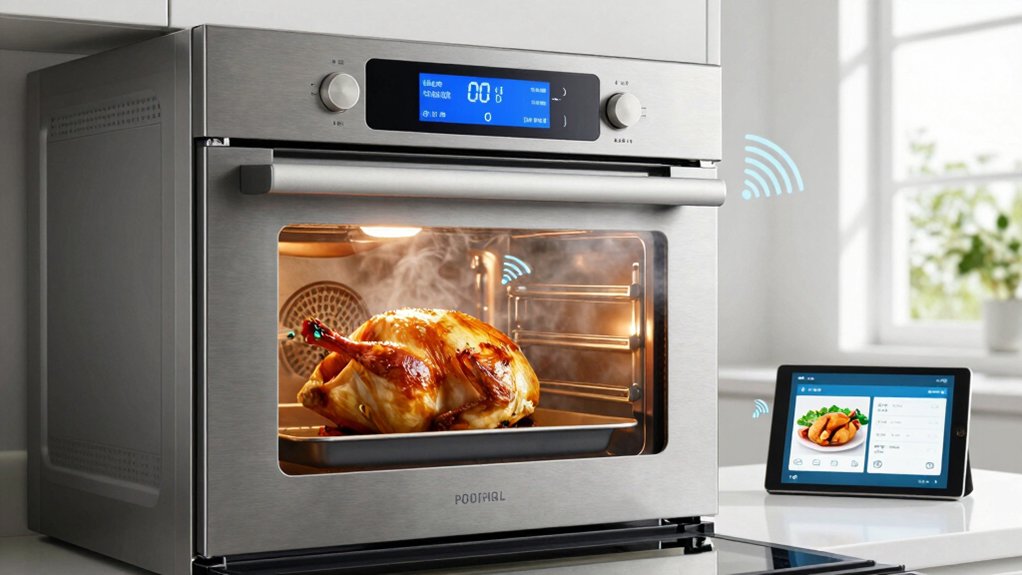
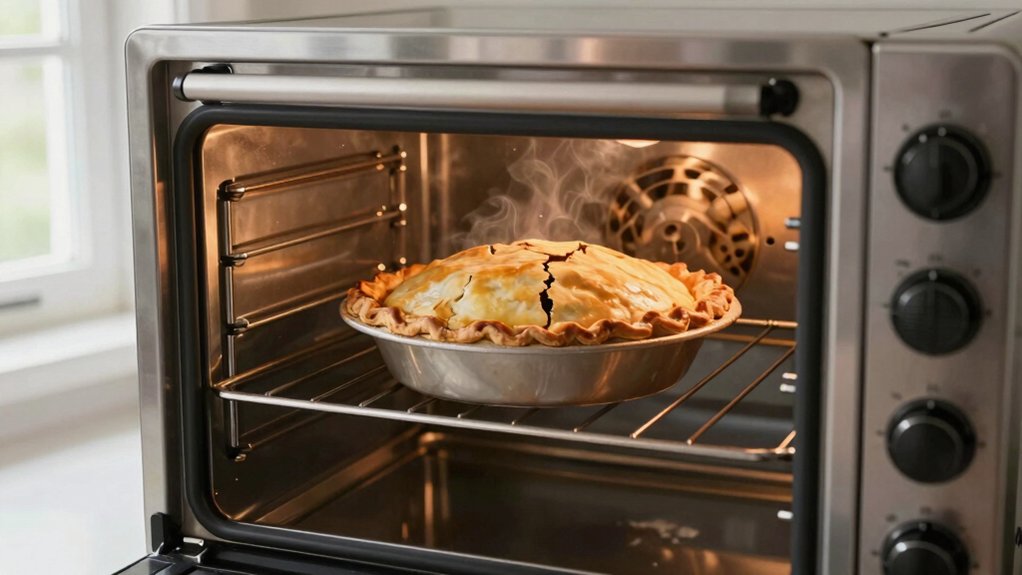
For baking, choose convection when roasting vegetables or cooking cookies and crispy meats—its fan circulates hot air, reducing bake time by up to 25% and lowering the needed temperature by 25°F (14°C). Use conventional for delicate items like cakes and custards, which need stable, gentle heat without airflow. Most recipes assume conventional settings, so adjust time and temperature when switching. True convection adds a third element near the fan for even better results—there’s more to consider when matching your oven to the dish.
Convection vs. Conventional: Heat Differences
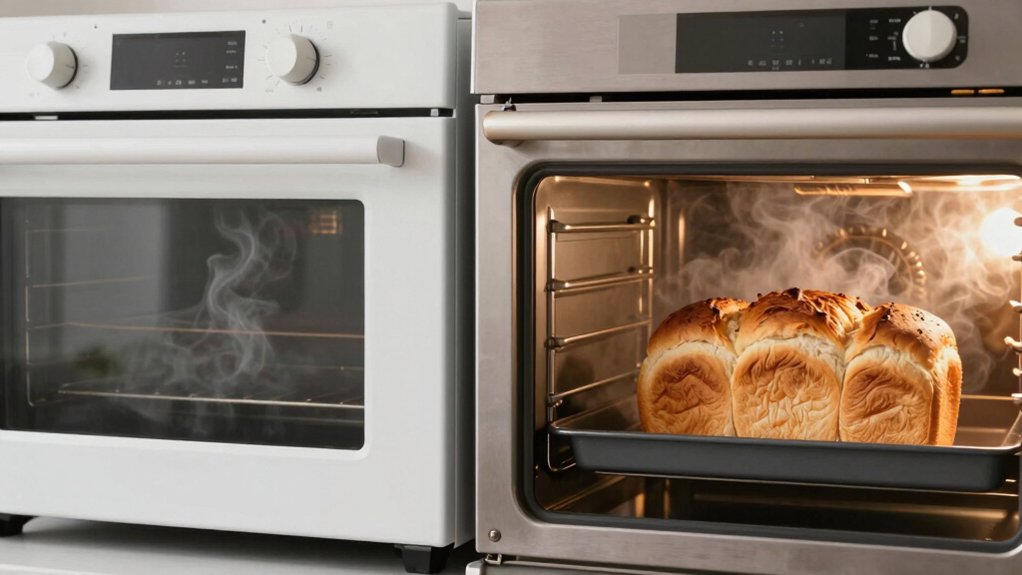
How does heat actually move in your oven—and why does it matter for your baking? In a conventional oven, radiant heat from top and bottom elements creates uneven hot spots, often requiring you to rotate pans for even baking. Convection ovens add a fan to circulate hot air, improving heat distribution and reducing bake time. Most recipes need a temperature adjustment—typically 25°F lower—when using convection. True convection includes a third heating element near the fan, boosting efficiency. Your oven modes let you switch between convection and conventional baking, so you can match the heat type to your dish’s needs.
When to Use a Convection Oven
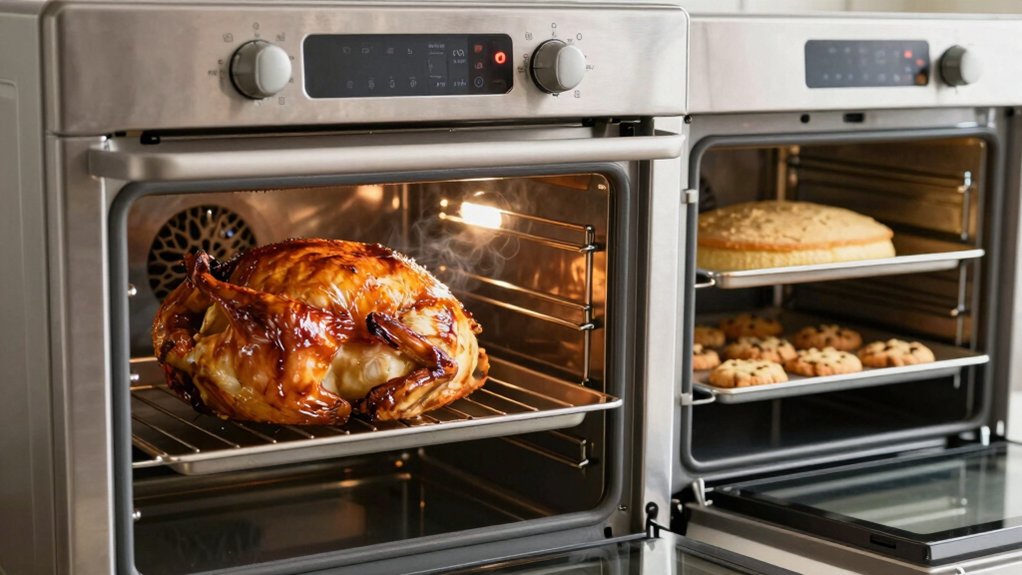
You already know how convection ovens use a fan and exhaust system to circulate hot air, leading to more consistent temperatures throughout the cavity than conventional models. Use a convection oven when you want improved bake evenness and faster bake times, especially with multiple racks.
For true convection—featuring a third heating element—expect better browning and more efficient cooking. Always make a temperature adjustment, reducing by 25°F (14°C), and check doneness timing 10–20 minutes early. Convection outperforms conventional bake for roasting vegetables, baking cookies, and crisping meats. Let food rest on a cooling rack post-cooking to maintain texture. Avoid auto-adjust features if they override your manual settings.
Stick to Conventional for Delicate Bakes
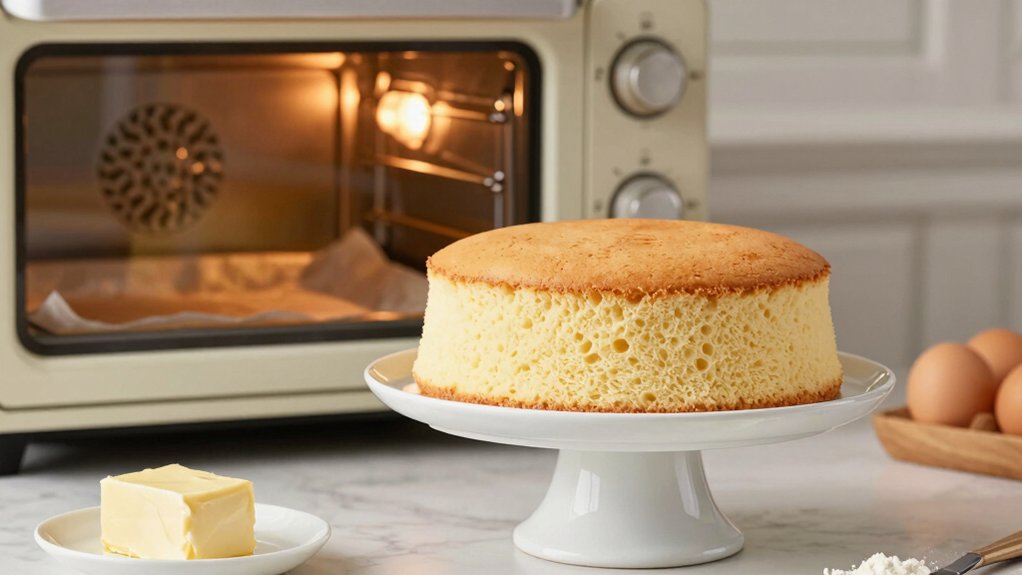
If you’re searching for the best oven for baking, it’s essential to match the right oven mode to the type of bake.Some of the most successful baking results come from matching the right oven mode to the type of bake. For delicate bakes like cakes and custards, stick with conventional baking. Convection vs Conventional heat makes a real difference—conventional ovens use no fan, relying on heating elements to deliver even heat and better moisture retention. This helps preserve tender textures and prevents premature drying. Most recipes assume standard bake settings and typical bake temperatures, so using convection can throw things off unless adjusted. With conventional heat, rotating racks isn’t as crucial, which helps maintain consistent structure in fragile items.
Adjusting Recipes for Convection and Conventional
When converting recipes for convection ovens, remember that circulating hot air cooks food faster and more evenly, so you’ll want to lower the temperature by 25°F (14°C) and begin checking for doneness at least 10 minutes earlier than the original bake time. This temperature adjustment helps prevent overcooking during recipe conversion.
Convection bake uses fan circulation for faster bake times and even browning, while conventional bake suits delicate items needing moisture retention.
True convection improves results with a third heating element.
Wondering what is the best oven for baking? In this guide we’ll compare convection vs conventional ovens to help you choose the best oven for baking cakes, cookies and more. For a deeper dive, check out this Whirlpool article.(https://www.whirlpool.com/blog/kitchen/convection-vs-conventional-oven.html)
Always monitor for doneness verification, as ovens vary. Some automatically adjust; others need manual changes.
Use conventional bake for cakes or breads, convection for roasting or crispy outcomes.
Conclusion
Choose convection for faster, more even cooking—ideal for roasting and baking crispy items like cookies or bread, often reducing time by 25% at 25°F lower. Use conventional for delicate bakes like cakes or soufflés, where consistent, gentle heat prevents cracking. Adjust recipes by lowering convection temperatures and checking early. Knowing when to use each ensures optimal results. Your best oven depends on what you bake most.