
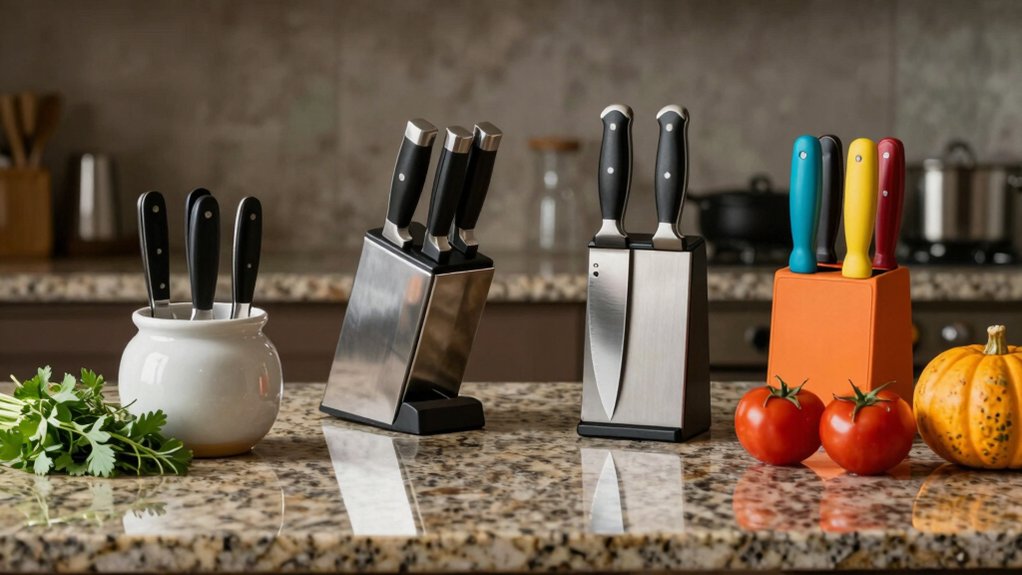
Start with a chef’s knife, paring knife, serrated bread knife, and sharpening steel to cover most kitchen tasks. Choose high-carbon stainless steel, like VG10 or SG2 (HRC 58–60), for durability and edge retention. Forged knives offer better balance and longevity, while stamped ones are lighter and cheaper. Match your set to your cooking—add a santoku for veggies or a boning knife for meat. Prioritize full tang, ergonomic handles, and riveted construction for control. A core trio fits most needs and budgets, and there’s more to discover about fine-tuning your choice.
Start With These 4 Essential Knives for Any Kitchen
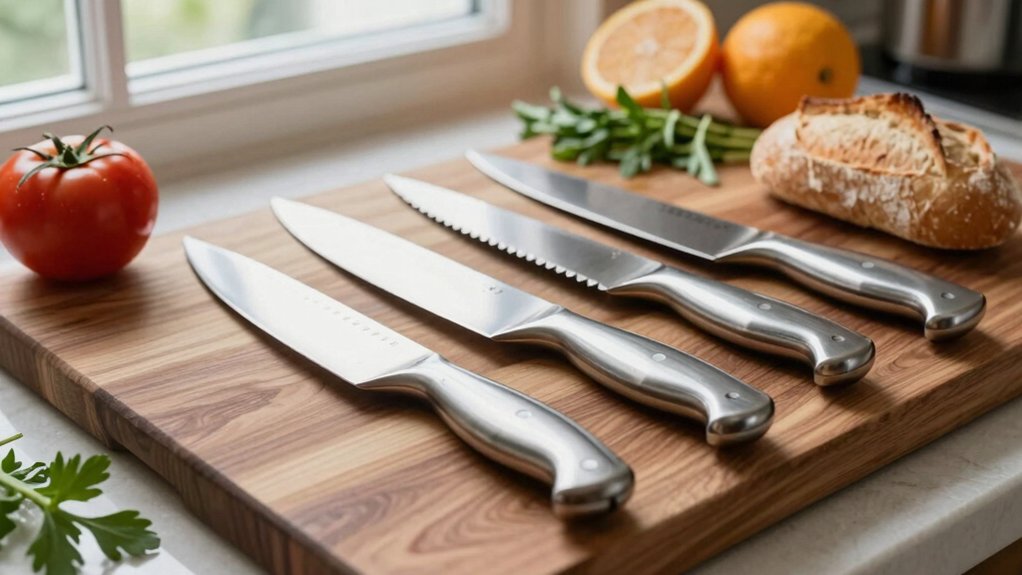
Every home cook needs just four essential knives to handle nearly any task in the kitchen: a Chef’s knife, a Paring knife, a Serrated bread knife, and a Sharpening steel.
Your Chef’s knife tackles chopping, dicing, and slicing with ease, especially when forged from high-carbon stainless steel for superior edge retention.
A high-carbon stainless steel Chef’s knife excels at chopping, dicing, and slicing, holding its sharp edge longer for effortless prep work.
Pair it with a Paring knife for precision work and a Serrated bread knife for crusty loaves or delicate tomatoes.
Together, they cover all cutting tasks efficiently.
Maintain sharpness weekly using the steel to realign the edge.
Store your knife set properly to protect blades and ensure safety.
Well-chosen kitchen knives in proper knife storage last longer and perform better, making this core four the smart foundation for any cook.
Choose the Best Blade Material for Your Knife Set
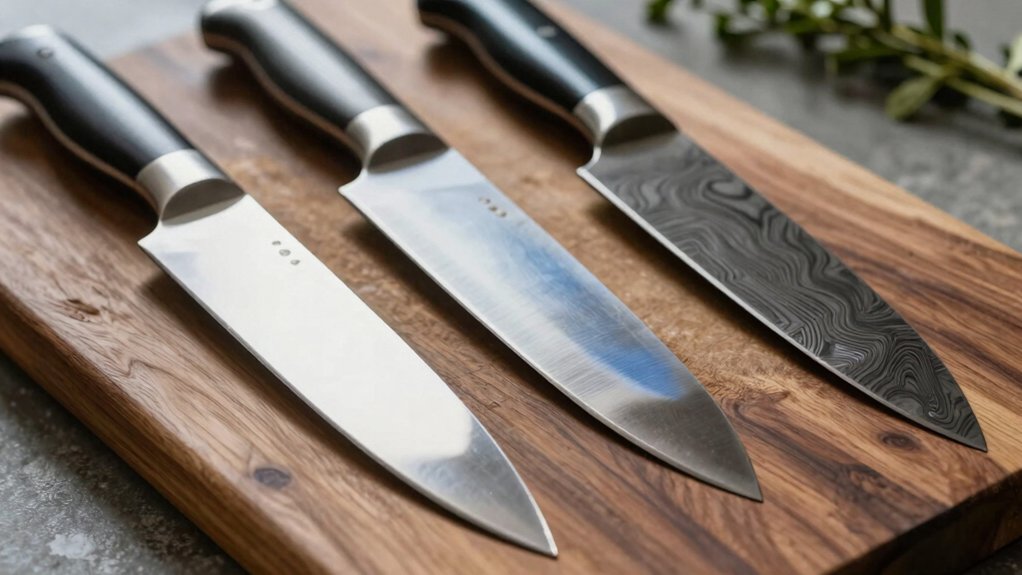
What makes one blade last longer or cut more cleanly than another? It’s all about the knife set materials. Carbon steel offers great edge retention and easy sharpening but lacks corrosion resistance, demanding careful maintenance. You’re better off with high-carbon stainless steel for balance—think VG10 or SG2, which deliver sharpness, hardness HRC around 60, and solid corrosion resistance. For even better performance, laminated/Damascus blades use a hard core (like SG2) between softer layers, enhancing edge retention without making sharpening a chore. Avoid vague “stainless steel” labels—look for specifics.
- Choose high-carbon stainless steel for durability and ease of care
- Look for VG10 or SG2 with hardness HRC ≥ 58 for best edge retention
- Consider laminated/Damascus if you want precision and easier re-sharpening
- Always check steel composition—don’t trust generic “stainless” claims
Forged vs Stamped: What’s Best for Your Knife Set?
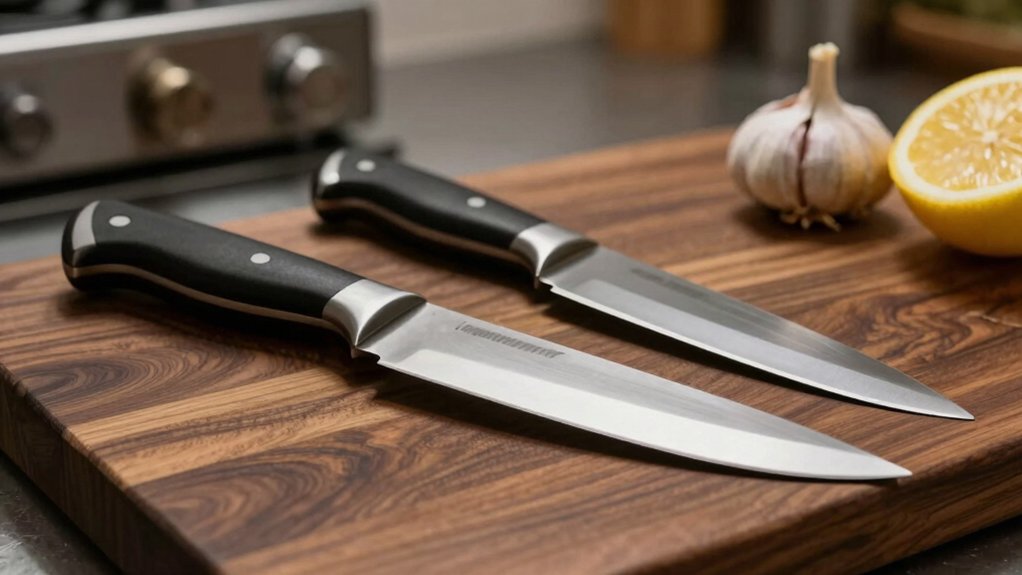
How do forged and stamped knives differ in performance and construction? Forged knives are shaped from a solid steel billet, giving your knife set superior durability, edge retention, and balance. They typically feature a full tang, bolster, and heavier weight, boosting control and long-term reliability. Stamped knives are cut from steel sheets, making them lighter and less expensive, but often with more variability in quality. While high-end stamped options can offer full tangs and good edge retention, forged blades usually win in toughness. Consider forged for heavy use and better balance; choose stamped if price and lighter weight matter more. In forged vs stamped, prioritize what suits your cooking habits and budget for lasting performance.
Pick the Right Knife Set for Your Cooking Style
Why does your cooking style matter when selecting a knife set? It determines which tools you’ll use most. Start with a core trio: chef knife, paring knife, and bread knife for daily tasks. If you cook meat often, add a boning knife; for vegetables, consider Japanese blades like a santoku. Choose German/French blades for durability or Japanese blades for sharpness. Match blade material to your upkeep preference—high-carbon stainless for low maintenance, carbon steel for edge retention. Prioritize blade balance and handle design for control.
- Use a chef knife for chopping, slicing, and dicing
- Pick Japanese or German/French blades based on precision vs. strength
- Match blade material to your maintenance willingness
- Select extras like a boning knife based on cooking style
Find the Right Balance and Grip
A well-chosen knife doesn’t just cut well—it feels like an extension of your hand, and that starts with balance and grip. When evaluating knives grip, focus on balance and weight feel; a full tang ensures stability and even weight distribution. Look for an ergonomic handle with a contoured shape that fits your hand comfortably during a comfort test. Riveted handle construction adds durability, while grip texture and moisture resistance improve control, especially with wet hands. Materials like resin or composite offer better moisture resistance than wood.
Ultimately, your knife set selection should prioritize how the knife feels in your hand—test it personally to ensure precision, control, and comfort in daily use.
Choose a Set That Matches Your Budget
What if your kitchen knife set didn’t just fit your counter space but also your budget and cooking habits? Choosing a knife set that matches your budget means focusing on daily use durability and long-term value. Prioritize quality over quantity—start with a core knife trio and invest in budget-friendly knives made from high-carbon stainless steel. Compare forged vs stamped blades to balance cost and performance. Look for a balanced handle and full-tang construction. Plan ahead with a future-proof set that allows a utility knife upgrade later.
- Pick a manageable 3–5 piece set
- Choose forged vs stamped based on knife set budget
- Ensure high-carbon stainless steel for edge retention
- Prioritize core knife trio with room for utility knife upgrade
Conclusion
Choose a knife set that includes a chef’s knife, paring knife, serrated knife, and utility knife for full coverage of basic tasks. Opt for high-carbon stainless steel blades—they resist rust and hold an edge longer. Forged knives offer durability and balance, while stamped ones are lighter and cheaper. Select a set with ergonomic handles and full tangs for better control. Match your choice to your cooking frequency and budget, typically $50–$200 for quality.
