
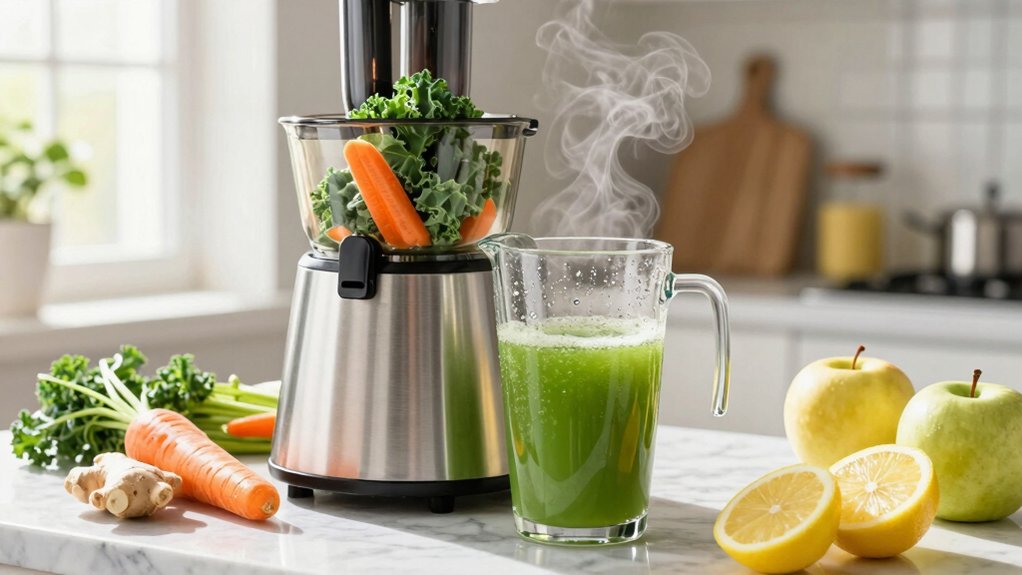
Juicers help you live a healthier lifestyle by delivering concentrated vitamins, minerals, and antioxidants from produce, especially when you use mostly vegetables—aim for 80% veggies and 20% fruit to limit sugar. Without fiber, juice can spike blood sugar, so keep servings to ½–1 cup daily and pair with protein or healthy fats. Blending is often better, but when done right, juicing can enhance nutrient intake. More insights follow on how to use juice wisely.
Is Juicing Healthier Than Whole Fruits and Veggies?
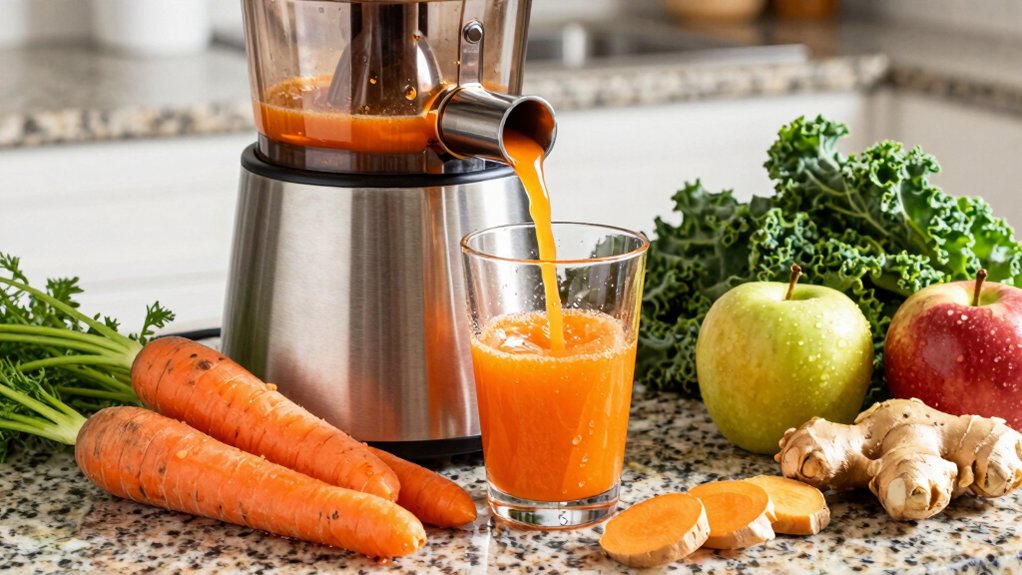
Is juicing really a healthier choice than eating whole fruits and vegetables? Not necessarily. While juicing delivers vitamins and some nutrients, it removes fiber—essential for digestion and fullness—that whole produce naturally contains. Without fiber, juices often pack more calorie/sugar per volume, causing quicker blood sugar spikes.
Blending, not juicing, preserves fiber and more nutrients. There’s no strong evidence that juice is healthier than whole fruits and vegetables. Juicing can enhance your daily produce intake, but it shouldn’t replace whole produce. For balance, enjoy juice as a supplement, not a substitute. Keep fiber a priority.
What Nutrients Does Juice Actually Provide?
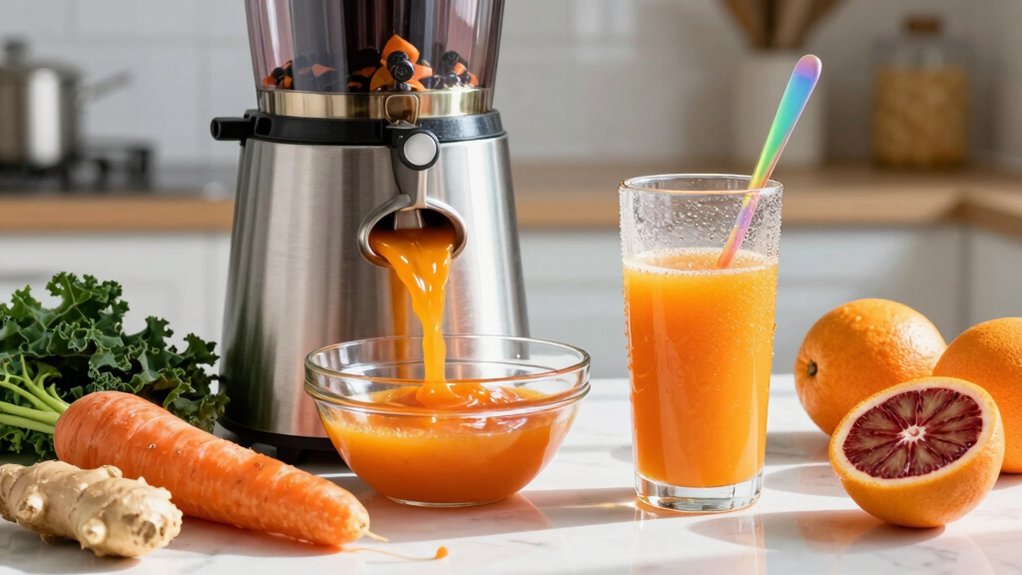
What exactly are you getting when you drink a glass of fresh juice? You’re consuming concentrated vitamins, minerals, and antioxidants from fruits and vegetables, delivering essential micronutrients your body needs. Cold-pressed juices retain more nutrients than store-bought versions, especially when consumed fresh. Leafy green juices provide iron, supporting energy and immune function, while colorful produce enhances antioxidant levels. Though juice lacks fiber, it still offers valuable plant compounds. Just keep in mind that natural sugars hit your bloodstream faster without fiber, so moderation matters. Stored juice can lose potency, so drink it quickly and keep it cold.
Why Losing Fiber Slows Digestion and Hurts Fullness
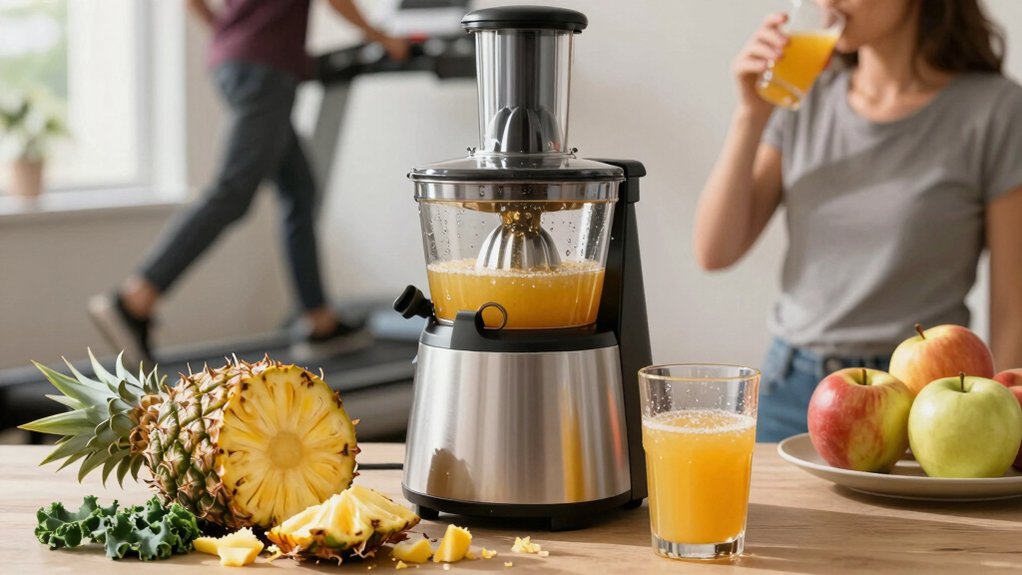
You lose a lot of fiber when you juice, and that means you miss out on the fullness it provides. Without fiber, your body digests the sugars in juice faster, which can spike your blood sugar and leave you hungry sooner. That quick absorption also means less stable energy compared to eating whole fruits or drinking blended smoothies with fiber intact.
Fiber Loss Reduces Fullness
Why do you feel hungry soon after drinking a glass of juice, even if it’s packed with vitamins and nutrients? Juicing strips away most of the fiber, reducing fullness and weakening satiety. Without fiber, digestion speeds up, and sugars hit your bloodstream faster—causing quick spikes and earlier hunger. Fiber normally adds bulk, slows absorption, and keeps you satisfied longer. When you skip it, your body gets nutrients but misses this essential fullness signal. Blending, unlike juicing, preserves fiber and supports better digestion. Maintaining fiber intake helps regulate appetite and improves long-term fullness.
Slower Digestion Without Fiber
Although juicing delivers a concentrated dose of vitamins and antioxidants, it removes most of the dietary fiber that supports steady digestion and lasting fullness. Without fiber, digestion speeds up because there’s less bulk to slow gastric emptying, leaving you feeling full for shorter periods. Juicing bypasses the natural chewing process, which normally triggers digestive cues and supports regulated gut motility via the migrating motor complex. The absence of fiber means your body absorbs nutrients rapidly, which can affect blood sugar balance. Blending whole produce retains fiber, supporting slower digestion and greater fullness compared to juicing.
Juicing Impacts Blood Sugar
A glass of fruit juice may seem like a healthy choice, but without the fiber found in whole produce, it can cause rapid spikes in blood sugar.
When you juice, you remove most of the fiber, leading to rapid glucose absorption—similar to drinking a soft drink.
This quick surge in blood sugar can lead to sharp insulin responses, followed by energy crashes and increased hunger.
In contrast, keeping fiber intact through blending supports steady blood sugar levels and promotes satiety.
Without fiber, you lose the fullness that helps control appetite.
For better satiety and balanced glucose, skip the juice and choose whole or blended fruits instead.
Juice vs Smoothies: Which Supports Long-Term Health?
You’re better off choosing smoothies over juice if you want long-term health, since smoothies keep the fiber that slows sugar absorption and keeps you full longer. A typical juice has about 20–30 grams of sugar per 8-ounce cup with little to no fiber, while a similar-sized smoothie with whole fruit, spinach, and almond butter offers fiber, healthy fats, and protein that balance blood sugar. By blending instead of juicing, you get more complete nutrition and avoid the quick spikes and crashes linked to high-sugar, low-fiber drinks.
Juice Vs Smoothies: Sugar Impact
What if your morning drink is spiking your blood sugar more than you realize? Juice has a higher glycemic impact than smoothies because it lacks fiber, allowing sugar to hit your bloodstream quickly—much like soda. When you drink juice, even cold-pressed, you’re getting concentrated sugar with little to slow absorption. Smoothies, however, keep the fiber, moderating blood glucose and increasing fullness. For better control, limit juice to ½–1 cup daily and pair with protein.
Smoothies, packed with fiber, protein, and healthy fats, offer steadier energy and support long-term health by reducing sugar spikes and improving satiety.
Smoothies Win: Fiber Advantage
Why do smoothies edge out juice when it comes to long-term health? Smoothies keep the fiber from whole fruits and vegetables, unlike juicing, which strips it away. That fiber supports digestion, boosts satiety, and slows sugar absorption, preventing energy crashes. Since smoothies retain pulp and micronutrients, they offer a steadier energy release. You can also add protein, healthy fats, or oats to further improve fullness and blunt glucose spikes.
Over time, the fiber in smoothies promotes gut microbiota diversity and regularity. For weight management and metabolic health, smoothies are generally better than juice due to their higher fiber content and stronger impact on digestion and satiety.
How to Drink Juice Without Spiking Your Blood Sugar
How can you enjoy juice without triggering a sharp rise in blood sugar? Choose 100% juice made mostly from vegetables—aim for 80% vegetables and just 20% fruit—to reduce available sugars. Practice portion control: limit yourself to ½ cup up to 1 cup per day. Drinking juice with a source of protein or healthy fat helps slow sugar absorption and blunts blood sugar spikes. Blend instead of juice when possible to retain fiber, which moderates blood sugar responses. Always consume freshly made juice within a few hours and store it refrigerated to prevent bacterial growth and sugar concentration changes.
When Juicing Actually Helps: and When It Hurts
You’ve likely heard about managing blood sugar when drinking juice, but understanding when juicing supports your health—and when it might work against it—requires a closer look at its benefits and drawbacks.
Juicing boosts nutrient absorption by breaking down plant cell walls, delivering vitamins and minerals quickly. However, fiber removal reduces fullness and can cause rapid blood sugar spikes, similar to sugary drinks.
If you’re using juicing for weight management, stick to small portions and avoid replacing whole fruits and vegetables. Without fiber, juice digests fast, increasing hunger and overeating risk.
For balanced results, don’t rely solely on juice—it complements, but doesn’t substitute, whole produce in your diet.
How to Include Juice in a Balanced Diet (Safely)
What’s the safest way to enjoy juice without undermining your health goals? Prioritize juice safety by making only what you’ll drink immediately or choosing pasteurized 100% juice. Stick to the 80/20 rule—80% vegetables, 20% fruit—for better sugar control. Limit intake to ½ to 1 cup daily to fit within a balanced diet. Always pair juice with protein for effective meal pairing and stable blood sugar.
| Tip | Action | Benefit |
|---|---|---|
| Use 80/20 rule | More veggies, less fruit | Lower sugar |
| Limit portion | ½–1 cup per day | Sugar control |
| Pair with protein | Add nuts or yogurt | Satiety boost |
| Choose pasteurized | Buy 100% juice | Juice safety |
| Meal pairing | Drink with meals | Balanced diet |
Conclusion
You can benefit from juicing when done mindfully. While juice lacks the fiber of whole produce—reducing fullness and increasing blood sugar spikes—it delivers vitamins like C and potassium quickly. For balance, drink 4–6 ounces occasionally, pair with protein or healthy fats, and prefer whole fruits and vegetables most days. Smoothies with fiber support long-term health better. Use juicing to supplement, not replace, whole-food nutrition.
