
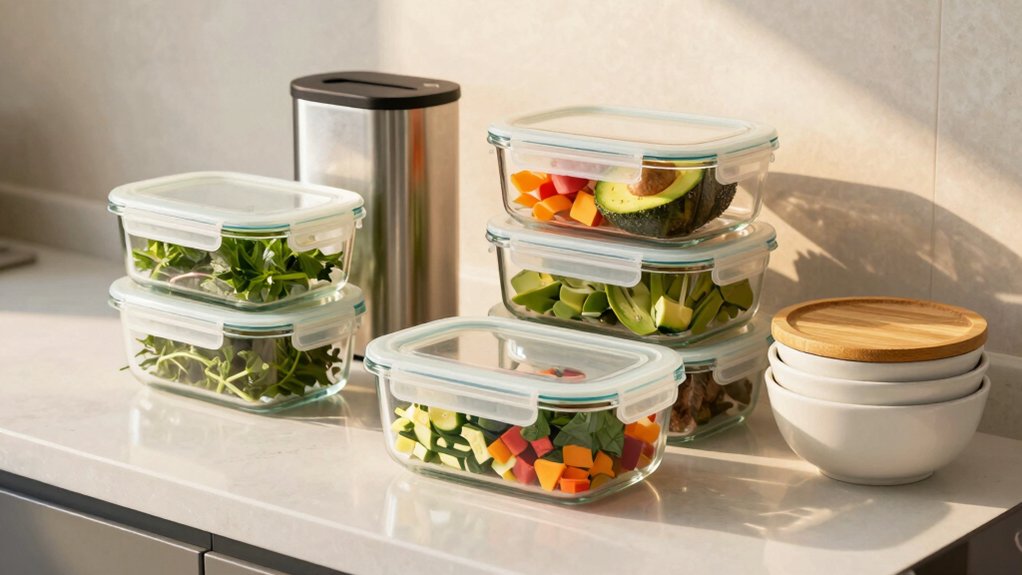
Choose glass or stain-resistant plastic containers with airtight silicone gasket lids to keep leftovers fresh. Opt for leakproof, microwave-safe models like borosilicate glass or Bentgo Glass that go from freezer to oven without warping. Use quart-sized for soups, pint for grains, and cup-sized for sauces. Snap closures and vented lids let steam escape during reheating—defrost in 4 minutes, heat fully in 90 seconds. Avoid non-freezer-safe plastics and sealed microwaving. Smart container choices preserve flavor and save space over time.
Choose the Best Material for Freezer Containers
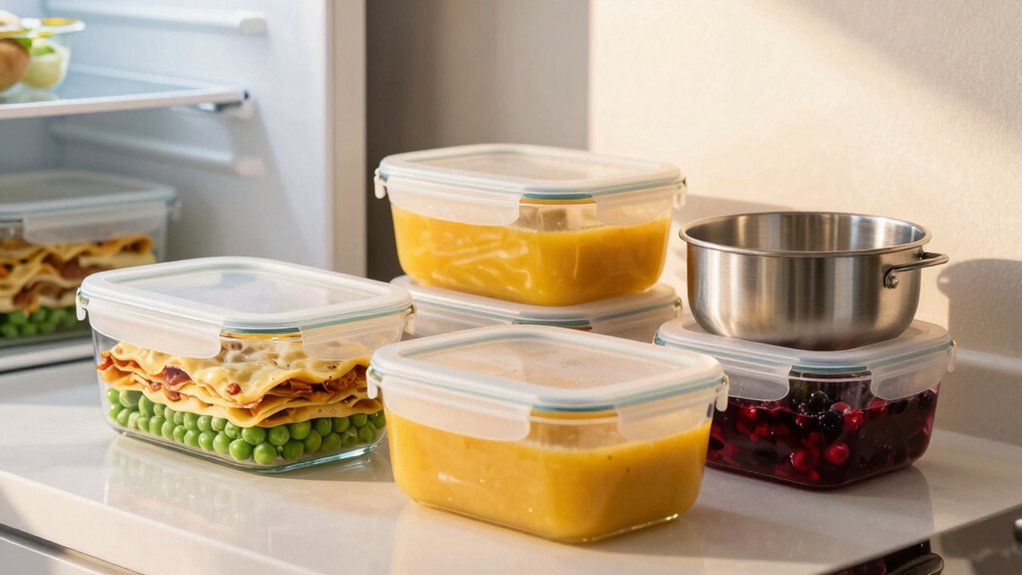
What makes one freezer container better than another? It often comes down to material. Plastic freezer containers are lightweight, budget-friendly, and offer great stain resistance and odor resistance, with airtight lids and venting for microwaving—though tomato sauces may stain them. Glass provides superior durability and heat resistance, allowing freezer-to-oven use, but is heavier and pricier. Brands like borosilicate Caraway or Bentgo Glass feature snap-on lids and clear visibility, though lids can be stiff. Both types deliver airtight seals, but glass resists odor transfer better. Choose plastic for everyday ease, glass for long-term sustainability, and consider your storage and reheating needs.
Pick Freezer Containers With a Tight, Leakproof Seal
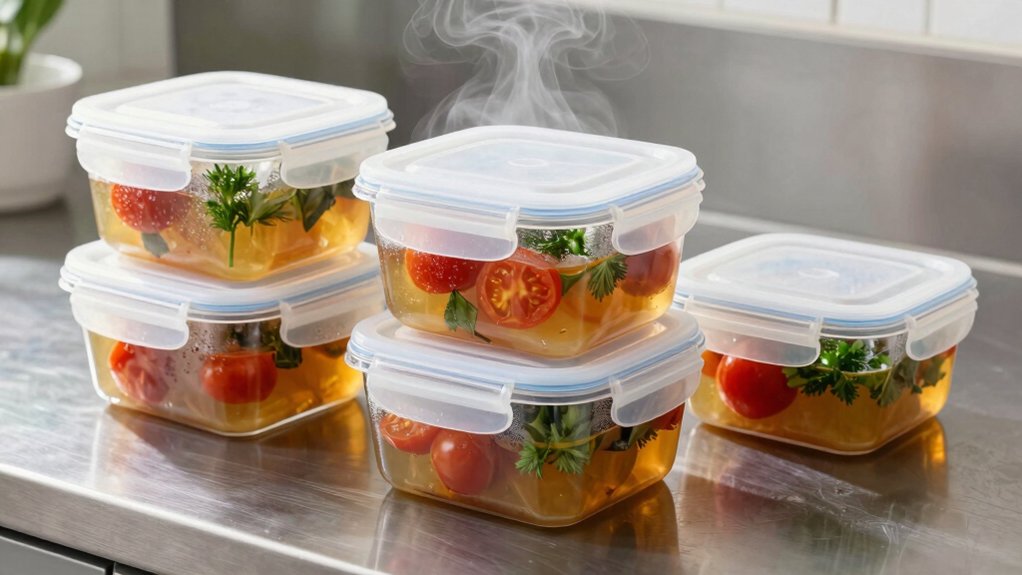
You need airtight containers to lock in freshness and keep freezer burn at bay. Look for leakproof designs with secure latches—they’ll hold tight even if you toss the container in a bag or reheat it straight from the freezer. Models like Rubbermaid Brilliance and DuraHome prove reliable, offering vapor-tight seals and vented lids that prevent splatters in the microwave.
Airtight For Maximum Protection
A high-quality freezer container with a tight, leakproof seal is essential for maintaining the freshness and quality of your leftovers. Airtight seals lock in moisture and block freezer burn, while vented lids allow safe microwaving without losing an airtight environment. Opt for clear containers to easily identify contents. Choose freezer-safe, stain- and odor-resistant materials to prevent molds and odors resistant to cleaning. Glass storage lasts longer and stays odor-free, while plastic offers lightweight leftover storage.
| Feature | Benefit |
|---|---|
| Airtight seals | Preserves freshness |
| Vented lids | Enables splatter-free reheating |
| Clear containers | Easy content identification |
| Stain- and odor-resistant | Long-term, hygienic use |
Leakproof Design Essential
Why do some leftover containers keep soups and sauces from spilling, even when jostled in a crowded fridge or freezer? Because they’re designed with a tight, leakproof seal. Look for lids with a silicone gasket—this soft ring creates an airtight barrier that locks in freshness and prevents leaks. Containers like Pyrex and Snapware use snap closures for secure, leak-resistant performance. These lids form a reliable seal, ideal for fridge/freezer storage. Most are dishwasher-safe, maintaining integrity after repeated washes.
Plastic sets, such as Snapware Total Solution, offer interchangeable lids and strong leak resistance, though keeping the gasket clean is key. Silicone gaskets enhance durability and sealing efficiency across glass and plastic options.
Secure Latches Prevent Spills
Snap-on lids with silicone gaskets don’t just keep food fresh—they actively prevent spills thanks to secure latches that lock tightly in place. For reliable spill prevention, choose containers with these key features:
- Leakproof design proven in water-fill and shake tests to contain liquids when tilted or shaken.
- Airtight seal created by snap-on lids and a silicone gasket to block leaks and odors.
- Secure latches that double as microwavable venting, releasing steam without splatter.
- Sturdy, warp-resistant construction that maintains a secure seal during stacking or transport.
These spill-proof containers ensure safe storage and easy reheating.
Match Container Sizes to Your Meal Habits
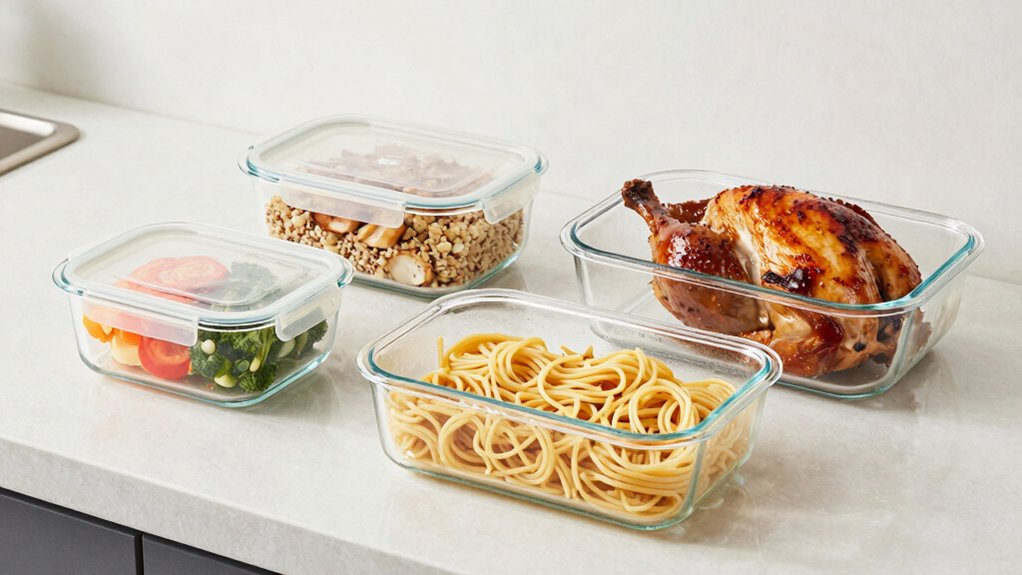
How often do you end up with half-empty containers or leftovers spilling through the fridge? Match your container sizes to your meal habits for better efficiency. Use quart-sized containers for soups, pint for beans or grains, and cup-sized for sauces. Opt for airtight, leakproof lids that are interchangeable across a set, so stacking and storage stay simple. Choose clear plastic or glass so you can easily spot contents without opening. Pick nesting, stackable designs to save space in your fridge or freezer. These smart choices keep your kitchen organized and your portions under control.
Make Sure They Go From Freezer to Microwave
Once you’ve matched your container sizes to your meal routines, focus on how well they handle temperature shifts. For seamless freezer to microwave transitions, choose containers that support quick, safe reheating of leftovers:
- Use microwave-safe glass containers with airtight seals and silicone gasket lids.
- Opt for leakproof designs that resist stains and odors during repeated freezer to microwave use.
- Open vented lids or partially release latches to allow steam to escape during reheating.
- Defrost frozen sauces (like 3.2 cups) in ~4 minutes with stirring, then reheat fully in about 90 seconds.
Glass and BPA-free options ensure reliable performance without flavor transfer.
Choose Space-Saving Stackable Containers
Why waste valuable fridge or freezer space when you can optimize storage with stackable containers designed to fit neatly together? Choose stackable containers with an airtight seal to keep food fresh and prevent leaks. Their nesting design saves space, while clear visibility helps you quickly identify leftovers.
Use glass containers for stain resistance and durability—they’re perfect for both fridge storage and freezer storage. Opt for leakproof options with uniform lids that swap easily between sizes. This system works whether you’re using plastic or glass. Vented microwave lids reduce splatter, supporting reheating without sacrificing stackable convenience. Uniform lids and airtight seals ensure organized, efficient storage every time.
Skip These Common Freezer Container Mistakes
Stackable containers help you maximize space and keep your fridge organized, but even the best storage system can fall short if you overlook key freezer-specific pitfalls. Avoid these common mistakes:
Stackable containers save space, but skip freezer-safe materials and seals at your own risk—small oversights lead to big food storage fails.
- Don’t use non-freezer-safe plastics—opt for airtight, leakproof resealable containers or glass storage to prevent freezer burn.
- Skip plastics that aren’t odor-resistant or stain-resistant; they absorb smells from onions or tomato sauce.
- Never microwave sealed containers—vent plastic lids to avoid splatter.
- Discard warped lids or containers; they break the seal. Check top-rack dishwasher labels—some lids dull or stain over time.
Conclusion
Choose containers made of BPA-free plastic or tempered glass for freezer use, ensuring they withstand temperatures as low as -20°F without cracking. Always pick ones with tight, leakproof seals to prevent freezer burn. Use 8- or 16-ounce sizes based on typical portion needs. Confirm they’re microwave-safe for easy reheating. Stackable designs save 30–50% more space. Avoid overfilling or using non-freezer-safe jars, which can shatter.
