
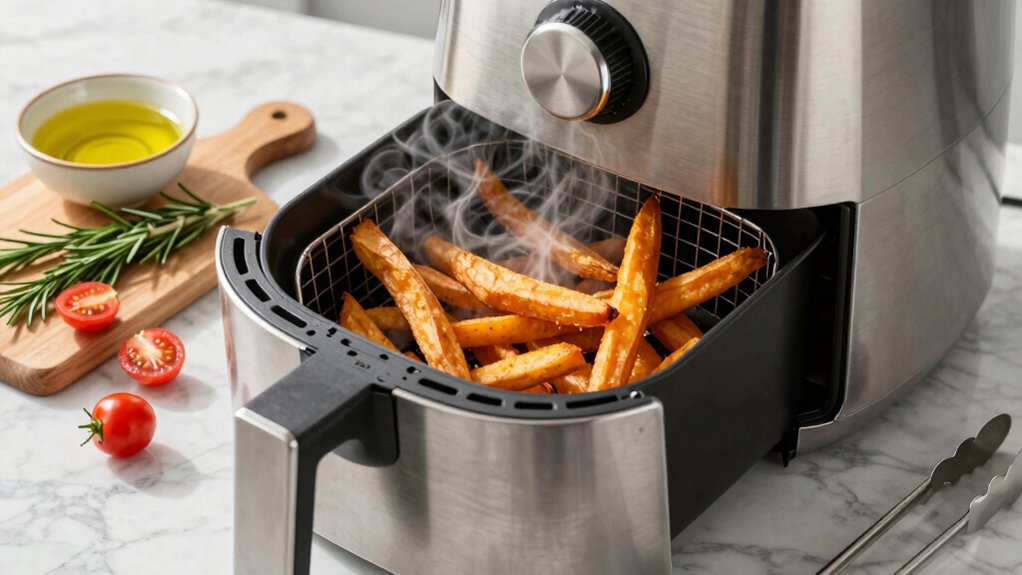
You cut oil by up to 80% when air frying versus deep frying, reducing acrylamide formation while still getting crispy results. Preheat the appliance for 3–5 minutes and use just ½ to 1 teaspoon of oil per serving. Cook lean proteins like chicken breast or salmon, and choose whole foods such as broccoli or sweet potatoes. Avoid processed items like bacon or breaded nuggets. Cut food into even 1-inch pieces, arrange in a single layer, and flip halfway. This preserves texture and ensures even cooking. Use herbs like paprika or garlic instead of heavy sauces. Reheat leftovers at 160–170°C in short bursts for a freshly fried feel. Clean the basket after each use with warm, soapy water to maintain performance. A clean fryer circulates air better and prevents residue buildup. There’s more to optimizing your meals with smart timing and temperature control.
Why Air Frying Beats Deep Frying for Health
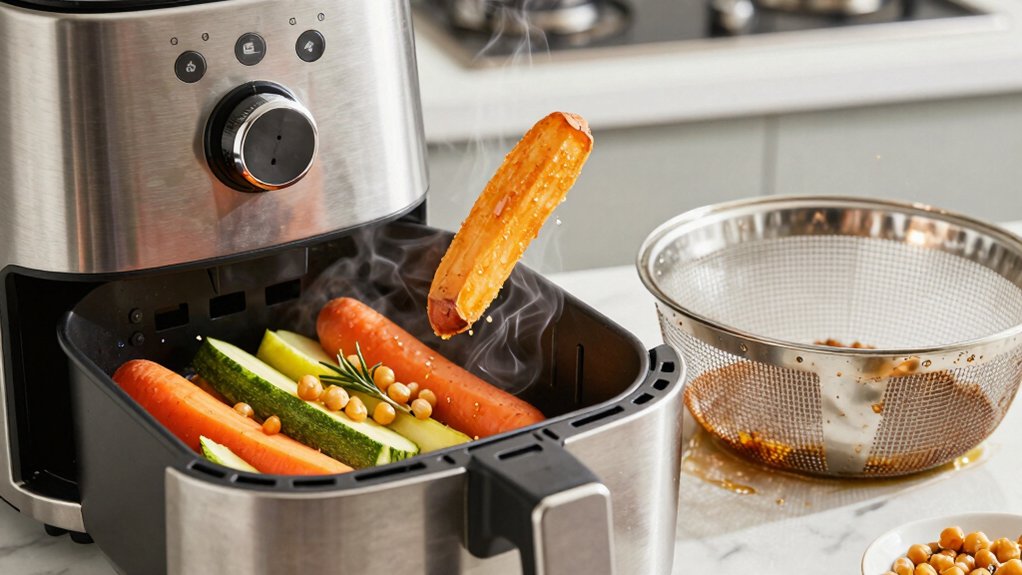
You’ll often find that air frying is a healthier alternative to deep frying because it relies on hot air circulation to crisp your food with little or no oil. The air frying health benefits include significantly reduced oil usage—up to 80% less fat compared to deep frying. You’ll also enjoy acrylamide reduction, as air fryers produce lower levels of this compound, linked to high-heat cooking. Crispy chicken, potatoes, and vegetables achieve great texture without excess grease. While deep frying adds unnecessary saturated fat and calories, air frying delivers similar results with reduced oil. Keep in mind, though, processed foods like bacon remain high-fat choices regardless of cooking method.
Prep Food for Healthier Air-Fried Results
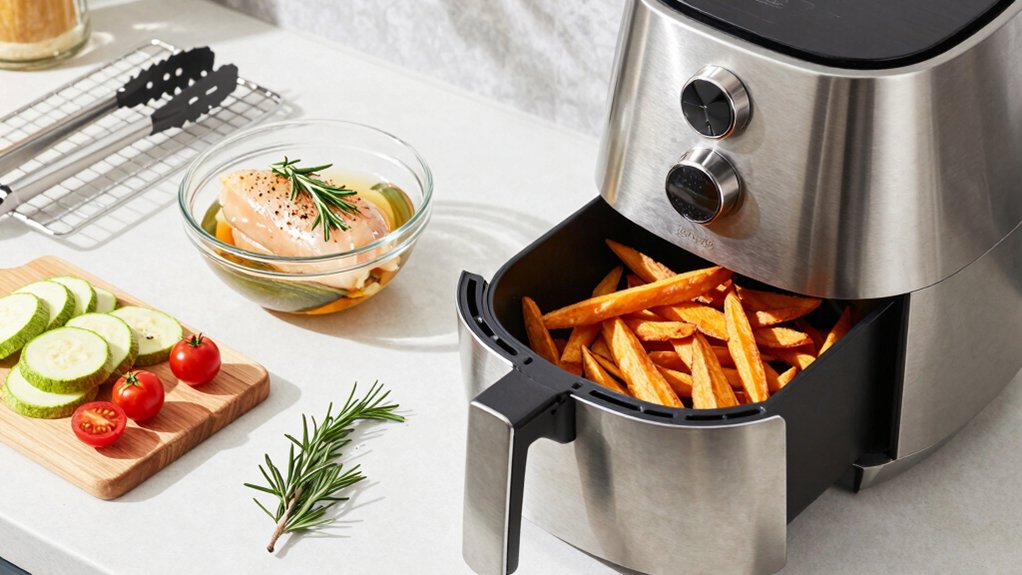
Air frying markedly cuts down on fat and harmful compounds compared to deep frying, but getting the best results depends on proper preparation. For starters, always do air fryer preheating for 3–5 minutes to jumpstart crisping and cut cooking time. Cut ingredients into evenly sized pieces—about 1-inch chunks—to guarantee uniform results. Use minimal oil—just 1/2 to 1 teaspoon per serving—to enhance browning without adding excess fat. Arrange food in a single layer with space between items, and flip or shake it halfway through.
| Step | Benefit |
|---|---|
| Preheat | Faster, crispier results |
| Evenly sized pieces | Uniform cooking |
| Minimal oil | Lower fat, still crispy |
| Single layer | Maximum air flow |
Best Whole Foods to Cook in Your Air Fryer
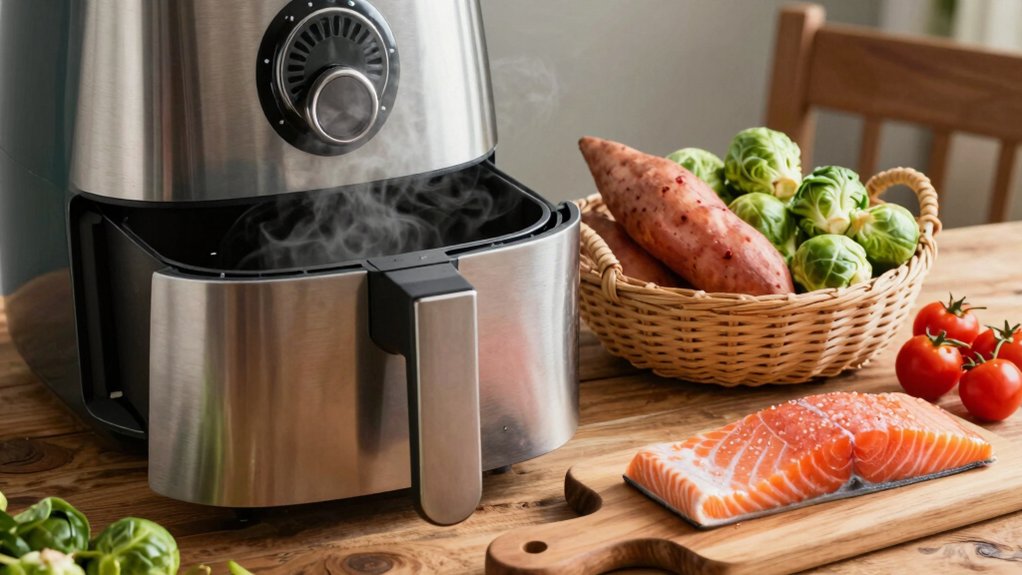
When preparing whole foods, the air fryer proves especially effective at delivering flavorful, evenly cooked meals with a crispy exterior and tender interior.
The air fryer excels at transforming whole foods into flavorful, evenly cooked meals with crisp outsides and tender, juicy interiors—minimal oil, maximum texture.
You can roast a 1.7 kg chicken at 190°C for 30 minutes—flip it at 20 minutes—for juicy results.
Bake potatoes at 190°C for 40–50 minutes to get fluffy insides and crisp skins.
Try courgette, peppers, or veggie wedges, cooked 15–20 minutes with a shake halfway.
Cube and season tempeh, then air fry for 15 minutes (shake once) for a crispy exterior.
Chickpeas or beetroot burgers take 6–20 minutes at 190°C.
These whole foods thrive in your air fryer with minimal oil and maximum texture.
Smart Swaps for Healthier Air Frying
You can make smarter swaps in your air frying routine by replacing deep-fried foods with lean proteins like chicken breast or salmon, which cut calories and saturated fat without sacrificing flavor.
Choose whole foods such as broccoli, sweet potatoes, and Brussels sprouts to retain more nutrients thanks to shorter cook times and minimal oil—just a light spray of 1 teaspoon or less per serving is enough for crispiness.
Skipping processed items like breaded nuggets or fatty bacon helps you keep the health benefits of air frying intact.
Smart Swaps For Healthier Choices
What if you could enjoy crispy, flavorful meals without the excess fat and calories? You can, with smart swaps that boost air fryer health. Choose lean protein like chicken breasts, fish, or tofu instead of fatty cuts. Replace deep-fried items with vegetables such as broccoli, zucchini, or Brussels sprouts—high in nutrients, low in calories. Use heart-healthy salmon or plant-based options like tempeh and beans. Skip heavy batters; season with herbs, garlic, or paprika instead. Preheat your air fryer and don’t overcrowd the basket. This ensures even crisping with little oil, cuts acrylamide risk, and preserves nutrients—making every bite a smarter, healthier choice.
Cook More Whole Foods
Though air fryers excel at mimicking the crispiness of deep-fried foods, their real advantage lies in promoting a diet centered on whole, nutrient-dense ingredients. You can use your air fryer to cook whole foods like vegetables, lean proteins, and heart-healthy fish, preserving nutrients with shorter cooking times and less oil. For healthy cooking, skip processed items like bacon and start with broccoli, chicken breasts, or salmon. Preheat the basket, avoid overcrowding, and season with herbs instead of heavy sauces. These simple steps enhance flavor and texture while cutting calories. Routine use supports roasting, baking, and reheating with minimal fat—making whole foods both delicious and convenient.
Maximize Crispiness Without Added Oil
How can food emerge golden and crisp from an air fryer with little to no oil? The secret lies in rapid hot air circulation, which delivers intense heat directly to surfaces, triggering the Maillard reaction for air fryer crispiness. You get even browning without deep frying’s excess fat. Use minimal oil—a light spray or brush—just enough to enhance texture, not soak it.
Avoid overcrowding; spread food in a single layer so hot air reaches all sides. Shake or flip items halfway for consistent results. Preheat the basket for 3–5 minutes to boost efficiency. With these steps, you achieve restaurant-quality crunch using up to 80% less fat, all while maintaining flavor and texture through smart, science-backed cooking.
Upgrade Frozen Foods in Your Air Fryer
You can upgrade your frozen favorites in minutes with crisp results and less oil than deep frying.
By using your air fryer at 180–200°C for just 8–15 minutes, classic snacks like fries and chicken nuggets turn golden and crunchy without excess fat.
This quick method gives you a healthier take on convenience foods while cutting down on calories and mess.
Crispy Results With Less Oil
When upgrading frozen foods, your air fryer delivers a crispy exterior using little to no oil, slashing fat and calorie content compared to deep frying. The air fryer’s rapid convection heat circulates hot air around food, producing a crispy texture without the grease.
You’ll achieve best results by preheating the appliance and arranging items like fries, nuggets, or mozzarella sticks in a single layer. Flip or shake them halfway through cooking for even browning.
Use less oil—sometimes none—while still enjoying rich, crunchy results.
Start with shorter cook times, as models vary, ensuring food is fully heated without over-browning.
This method supports smarter choices with consistent, satisfying outcomes.
Healthier Take On Classic Snacks
An air fryer transforms frozen snacks into healthier versions of classic favorites by delivering a satisfying crunch with minimal oil. You get a crispy texture without deep-frying’s excess fat, cutting calories and acrylamide formation. For best results, preheat your air fryer and arrange foods like fries or nuggets in a single layer. Shake the basket halfway through for even browning and to prevent sogginess. Air fryer efficiency means quicker, more uniform cooking. Choose frozen options with lighter coatings and fewer additives to enhance healthier snacking. These choices, combined with high-heat air circulation, reduce overall fat intake while maintaining flavor and texture you recognize—without the guilt of traditional frying methods.
Quick Upgrade For Frozen Favorites
While frozen foods often get a bad rap for being processed or unhealthy, turning to your air fryer can transform them into a much better version of themselves with little effort.
Preheat the air fryer to 180–200°C (350–400°F) for a crispy texture without added oil. Shake the basket halfway through cooking—about 15–20 minutes for fries—to ensure even browning.
Lightly spray nuggets or fish sticks with oil for crispiness using less fat, supporting healthier cooking.
Flip delicate items like mozzarella sticks at the 4-minute mark, cooking 8–12 minutes total.
Reheat frozen leftovers at 160–170°C (325–340°F) in short bursts, checking for that freshly fried feel.
Keep Your Air Fryer Clean (And Cooking Better)
How often do you clean your air fryer—after every use, or only when food starts sticking? Proper air fryer maintenance ensures better cooking results and extends appliance life.
Cleaning the basket and tray in warm, soapy water after each use preserves the non-stick coating and prevents residue buildup. Wipe the exterior and control panel with a damp cloth to remove splashes without damaging electronics. Periodically remove the basket to clean interior walls, where grease and crumbs collect. Never use abrasive cleaners or metal scrapers—they damage the non-stick coating. Always dry all parts thoroughly before reassembling. Consistent cleaning keeps your air fryer performing efficiently.
Conclusion
You now know how to use your air fryer for healthier cooking. By reducing oil by up to 80% compared to deep frying, you cut calories without sacrificing crispiness. Choose whole foods like vegetables, lean proteins, and smart swaps like panko-coated chicken instead of fried. Clean your air fryer regularly to maintain performance. With proper prep and choices, your air fryer becomes a powerful tool for nutritious, convenient meals.
